
The Office for National Statistics delivered some rare good news this morning: UK inflation fell to 3.0% in January 2026, down from 3.4% in December and hitting its lowest level in nearly a year. On paper, it’s a welcome reprieve for households squeezed by years of price rises. But before the champagne corks start popping in Threadneedle Street, it’s worth asking whether this marks a genuine turning point: or just a brief lull before the next economic storm.
What’s Driving the Drop?
The headline figure makes for pleasant reading, but the devil, as always, is in the detail. The sharpest downward pressure came from falling motor fuel prices, with petrol and diesel costs dropping significantly between December and January. Energy prices more broadly also contributed, reversing the pattern from a year earlier when prices were climbing. Food prices: particularly for bread, cereals, and meat: also eased, offering some relief at the checkout.
Core inflation, which strips out volatile energy and food costs, fell to 3.1% from 3.2%, suggesting the trend isn’t just a flash in the pan. With the energy price cap expected to drop again in April, there’s reason to believe inflation could edge closer to the Bank of England’s 2% target by spring.
But here’s the rub: services inflation remains stubbornly high at 4.4%. Housing and household services inflation sits at 4.5%, reflecting persistent cost pressures that aren’t going away anytime soon. Hotel prices and takeaway costs actually moved upward during the same period, underscoring that while headline inflation is cooling, everyday expenses are still biting.
The Unemployment Headwind
Any celebration of falling inflation needs to be tempered by the broader economic picture: and it’s not pretty. Just yesterday, unemployment hit a five-year high of 5.2%, driven in large part by the National Insurance Contributions hike that’s made entry-level hiring prohibitively expensive for many businesses. Younger workers, in particular, are bearing the brunt, locked out of opportunities as companies tighten their belts and seem to be prioritising experience over youth.
Wage growth is also cooling, which might sound like good news for inflationary pressures but is cold comfort for workers facing stagnant pay packets and rising costs in key areas like rent and utilities. The cost-of-living crisis, it seems, isn’t over: it’s just evolving.
Pressure Mounts on the Bank of England
The latest inflation data has ramped up pressure on the Bank of England to finally deliver meaningful interest rate cuts. Markets are now expecting a reduction to 3.5% when the Monetary Policy Committee meets in March, and economists are increasingly confident that the disinflationary momentum will continue.
Prime Minister Starmer has made tackling the cost-of-living crisis a central priority, and the TUC has called for “quick-fire rate cuts” to support growth and ease the burden on borrowers. With mortgage holders still reeling from years of elevated rates and business investment stalling, there’s a strong political and economic case for action.
But the Bank faces a delicate balancing act. Cut too aggressively, and you risk reigniting inflation: particularly with services prices still proving sticky. Cut too cautiously, and you risk choking off growth at a time when the economy can ill afford it.
A Turning Point or a False Dawn?
So, what does Westminster make of all this? The answer, frustratingly, is “it depends”.
Unsurprisingly, Prime Minister Keir Starmer hailed the drop in the UK inflation rate to 3% is a result of the “choices this Labour government has made”.
“Lower food and petrol prices are helping ease the pressure on household budgets,” he said.
“I know there’s more to do, cutting the cost of living is my number one priority.”
Welcoming the drop Liberal Democrat deputy leader Daisy Cooper said it “offers a glimmer of hope”, adding “the bigger picture is still bleak”.
Cooper also questioned why Chancellor Rachel Reeves “refuses to pull the biggest growth lever available” by securing “a better trade” deal with the UK’s European allies.
While shadow chancellor Mel Stride struck a much more negative tone, highlighting that inflation still “remains above target thanks to Labour’s choices”.
“Families are still feeling the pinch because of Labour’s economic mismanagement,” he said, adding “Britain is not being governed – the economy is weaker and working people are paying the price. Only the Conservatives have a plan for a stronger economy, and a leader with the backbone to deliver that plan and get Britain working again.”
The Road Ahead
Inflation at 3% is undeniably progress. But with unemployment rising, wage growth slowing, and key cost pressures refusing to budge, it’s too early to declare victory. The coming months will tell us whether January’s figures represent a genuine inflection point or just a temporary reprieve.
For now, the message is clear: this rare piece of positive economic news is welcome, but high unemployment, especially among the young, low business confidence and almost stagnant productivity gains reminds us that the UK economy is still navigating choppy waters.
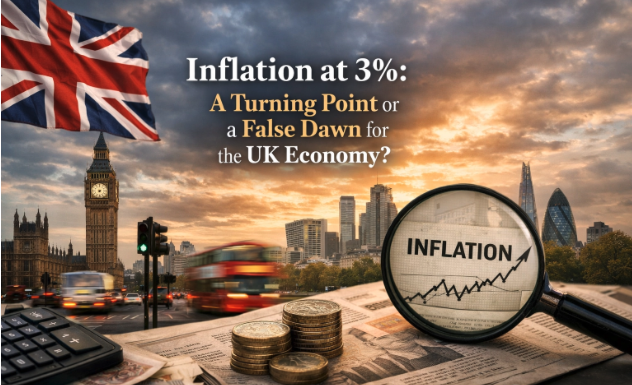
Inflation at 3%: A Turning Point or a False Dawn for the UK Economy?

6 mins read
Latest from UK News

CAERNARFON, WALES, June 13 (Parliament Politics Magazine) – Hundreds of birdwatchers from across the UK have

DERBYSHIRE, ENGLAND, June 13 (Parliament Politics Magazine) – A criminal investigation has been launched into a

LONDON, June 13 (Parliament Politics Magazine) – Online Safety Minister Kanishka Narayan signaled that the government
LONDON, June 13 (Parliament Politics Magazine) – More than 100 Parliamentarians have formally requested that the

LANCASHIRE, June 13 (Parliament Politics Magazine) – A 17-year-old girl is recovering at home after being