

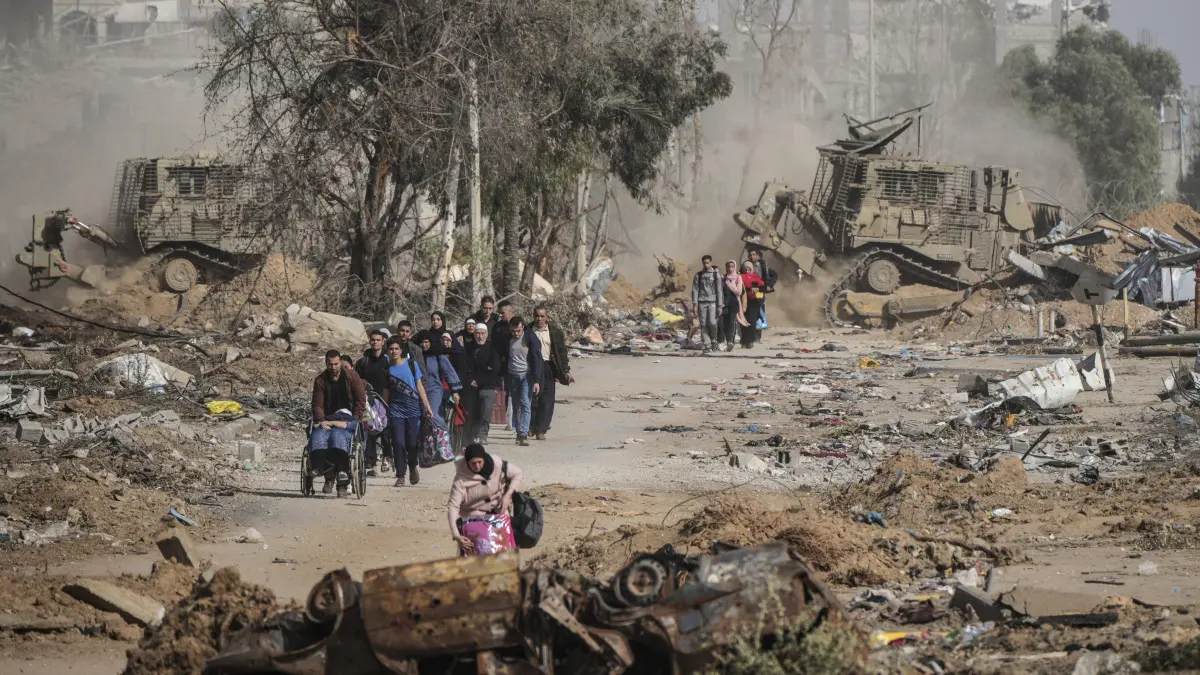
Gaza Strip — January 2026: According to parliament news,that International focus on the growing dangers faced by media workers covering the Gaza conflict, as diplomats, legal experts, and press freedom advocates gather across European institutions to examine civilian protections in modern warfare. At the center of these discussions is the increasing concern that Israeli military strikes journalists, a development that has intensified global alarm over the safety of reporters working in active conflict zones.
As fighting continues, journalists remain among the few consistent witnesses documenting daily life under bombardment, humanitarian collapse, and mass displacement.
Journalism’s Role When Conflicts Are Sealed Off
In conflicts where borders are sealed and access is restricted, local journalists often become the primary source of information for the outside world. In Gaza, international media presence is limited, leaving Palestinian reporters to document airstrikes, displacement, hospital conditions, and civilian casualties with minimal protection.
The issue of Israeli military strikes journalists has therefore drawn attention not only to individual tragedies, but also to the fragile infrastructure of information that sustains global awareness during war.
The Rising Toll on Media Workers
Press freedom organizations tracking casualties have recorded a steady rise in the number of journalists killed or injured during the current phase of fighting. Many were actively reporting at the time of their deaths, some wearing visible press identification, others filming in neighborhoods under evacuation orders.
As Israeli military strikes journalists, watchdog groups warn that the cumulative toll risks normalizing the loss of media workers as an unavoidable consequence of war rather than a preventable violation.
Life and Work Under Constant Threat
Reporting from Gaza involves hazards that extend beyond the battlefield. Journalists face chronic shortages of electricity, fuel, and safe shelter. Communication blackouts disrupt the transmission of footage and verification of events. Many reporters live with their families in areas that later become targets, collapsing the line between professional duty and personal survival.
The reality that Israeli military strikes journalists unfolds within a broader humanitarian crisis where civilians and reporters face identical dangers from the same attacks.
International Law and the Civilian Status of Journalists
Under international humanitarian law, journalists are classified as civilians and are entitled to protection unless they take a direct part in hostilities. Legal experts stress that harm to journalists demands scrutiny, particularly when patterns emerge across multiple incidents.
The growing concern that Israeli military strikes journalists has led legal scholars to renew calls for transparent investigations, independent verification, and accountability mechanisms that function even during active hostilities.
European Institutions Elevate the Issue
In Brussels, journalist safety has moved from advocacy forums into diplomatic conversations. European officials increasingly frame media protection as a legal and humanitarian obligation tied to broader civilian safeguards in armed conflict.
As awareness spreads that Israeli military strikes journalists, pressure has mounted on European bodies to address compliance with international law through diplomatic engagement rather than rhetorical condemnation alone.
The Consequences for Global News Coverage
The loss of journalists directly affects the flow of information. Newsrooms face shrinking reporting capacity as experienced correspondents are killed or injured. Remaining journalists often restrict movement, limiting coverage to safer but less representative locations.
When Israeli military strikes journalists, the resulting gaps in reporting reduce visibility into civilian suffering, humanitarian needs, and the long-term impact of military operations.
Families, Colleagues, and Unseen Losses
Behind every journalist killed is a network of family members and colleagues grappling with loss amid ongoing violence. Many journalists were primary breadwinners, leaving families without income or security. Colleagues describe fallen reporters as committed professionals who believed documenting events was a public duty.
The continued reality that Israeli military strikes journalists has transformed journalism from a profession of risk into one of persistent vulnerability.
A Singular Voice From the Press Freedom Community
One senior press freedom advocate attending meetings in Brussels said,
“When journalists are killed while doing their jobs, the world loses its ability to see clearly, and accountability fades in the shadows.”
A Longstanding Pattern of Danger in Gaza
Gaza has repeatedly ranked among the most dangerous places in the world for journalists. Previous conflicts established patterns of restricted access, limited protection, and high casualty rates. Despite international concern, these patterns have persisted across successive escalations.
Renewed focus on Israeli military strikes journalists suggests that lessons from earlier conflicts remain unaddressed, leaving reporters exposed to recurring risks.
Barriers to Independent Investigations
Investigating journalist deaths in active war zones presents formidable challenges. Access restrictions, security risks, and political sensitivities often delay or obstruct independent inquiries. Evidence collection is complicated by damaged infrastructure and limited forensic access.
Still, legal experts argue that allegations involving Israeli military strikes journalists require credible, independent investigations to preserve international legal standards and deter future violations.
Freelancers and Citizen Journalists Face Growing Risk
As traditional news organizations reduce on-the-ground presence, freelancers and citizen journalists increasingly fill coverage gaps. These individuals often lack protective equipment, institutional backing, or insurance, making them especially vulnerable.
The danger that Israeli military strikes journalists now extends beyond established media outlets to ordinary civilians documenting events with mobile phones and social media platforms.
Psychological Trauma Among Surviving Reporters
Surviving journalists report high levels of trauma, anxiety, and burnout. Many continue working despite personal loss, driven by a sense of responsibility to document events for the outside world. Mental health resources remain scarce, compounding the toll.
The persistent fear that Israeli military strikes journalists has created a psychological crisis within Gaza’s media community that extends long after individual incidents.
Why This Issue Resonates Beyond the Region
Attacks on journalists reverberate far beyond Gaza. Press freedom is a cornerstone of democratic societies, and its erosion in one conflict zone weakens protections everywhere. When journalists are harmed, misinformation thrives and accountability suffers.
As long as Israeli military strikes journalists, global media organizations warn that international safeguards for reporters remain fragile and inconsistently enforced.
Calls for Stronger Protective Measures
Press freedom advocates have urged clearer military protocols, improved press identification safeguards, and independent monitoring systems to reduce risk. Some propose international mechanisms specifically dedicated to journalist safety in conflict zones.
The repeated reality that Israeli military strikes journalists underscores the urgency of moving beyond statements toward enforceable protections.
The Public Right to Know at Stake
Without journalists, conflicts unfold in darkness. Accurate reporting informs humanitarian response, diplomatic decision-making, and historical record. When journalists are silenced, civilian suffering becomes easier to ignore and harder to address.
The continued concern that Israeli military strikes journalists challenges the international community to reaffirm its commitment to transparency and the protection of those who bear witness.
Digital Warfare and the Information Battlefield
Modern conflicts are fought not only with weapons but with narratives. Journalists play a crucial role in verifying information amid disinformation campaigns and digital manipulation. Their absence creates space for unverified claims to dominate public discourse.
In this environment, the fact that Israeli military strikes journalists carries implications not just for safety, but for the integrity of global information ecosystems.
The Responsibility of the International Community
Governments, international organizations, and media institutions all share responsibility for protecting journalists. Diplomatic pressure, legal accountability, and sustained monitoring are essential to ensuring that civilian protections are upheld.
As discussions continue in Brussels, the question of how the world responds when Israeli military strikes journalists will shape future norms for conflict reporting.
A Defining Moment for Global Journalism
The events unfolding in 2026 represent a defining moment for global journalism. Whether the international community strengthens protections for reporters or allows risks to persist will determine the future of conflict coverage worldwide. For journalists in Gaza and beyond, the outcome of this debate may decide whether bearing witness remains possible—or becomes too dangerous to continue.