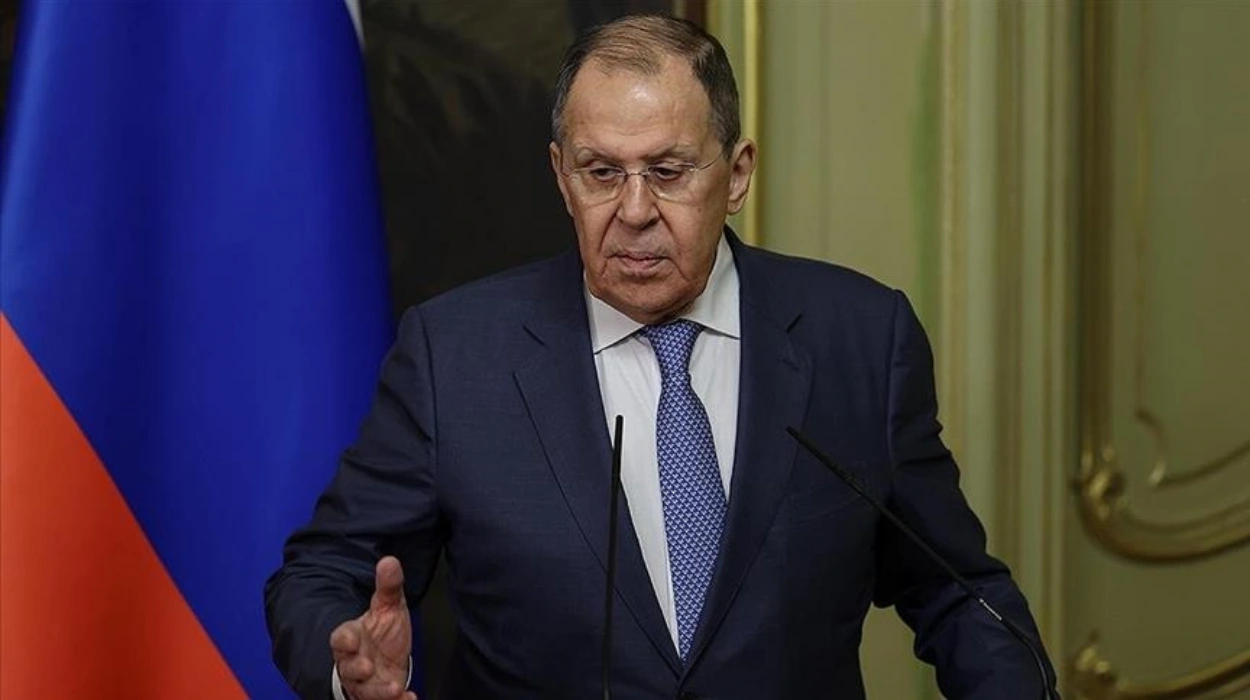
Moscow (Parliament Politics Magazine) – Russia says Tehran exercised restraint after Israeli and US strikes on its nuclear facilities, stressing Iran’s commitment to dialogue despite ongoing tensions.
As reported by Iran International, Russian Foreign Minister Sergei Lavrov
says Iran showed restraint after US-Israel strikes on nuclear sites, maintaining dialogue despite rising Middle East tensions.
What did Russia say about Iran’s handling of recent Middle East tensions?
During an interview, Sergei Lavrov described 2025 as marked by “unprecedented events,” citing Israeli strikes on Iranian nuclear sites carried out with US support despite International Atomic Energy Agency safeguards.
He said,
“Iranians have been exercising maximum restraint and composure by responding to all the provocations and blackmail on behalf of the West by stating their commitment to dialogue and resolving the lingering differences by political means.”
Moscow strongly condemned the attacks, with Lavrov saying they violate international law and widely accepted moral standards, adding,
“They are completely at odds with international standards and universally recognized moral imperatives.”
Lavrov said Israeli officials’ readiness to strike Iran again is a “matter of grave concern”, warning the region could remain highly tense.
He criticized European nations, accusing them of “adding fuel to the fire” by pursuing policies that divide the Middle East instead of promoting regional unity.
What did Masoud Pezeshkian say about full-scale war with the West?
Ahead of Monday’s talks between Israeli PM Netanyahu and US President Trump, Iran’s President Masoud Pezeshkian said his country is in a full-scale war with the US, Israel, and Europe.
In an interview released on the website of Supreme Leader Ayatollah Ali Khamenei, he described the ongoing war as even more severe than Iran’s 1980s conflict with Iraq.
Mr Pezeshkian said,
“We are in a full-scale war with the U.S., Israel and Europe; they don’t want our country to remain stable.”
He described the West’s campaign against Tehran as “more complex and challenging” than the 1980–1988 war with Iraq, which claimed over a million lives on both sides.
His comments came just two days before President Netanyahu’s visit to the US, where talks with President Trump are expected to focus heavily on Iran.
Israeli and American attacks on Iran during June’s 12-day air war killed nearly 1,100 Iranians, targeting senior commanders and nuclear experts, while Iran’s missile strikes claimed 28 lives in Israel.
Why is the US against Iran’s nuclear power?
The recent US attacks on Iranian nuclear facilities are the result of a long-standing policy goal to prevent Iran from developing nuclear weapons.
For years, the core US objective has been to “put Iran’s nuclear program in a box” to ensure it can never build a nuclear weapon.
US intelligence had not concluded Iran decided to build one, but Iran had stockpiled significant amounts of near-weapons-grade uranium and hindered international inspections.
Washington and Israel argued that negotiations had failed. The 2015 nuclear agreement restricted Iran, but the US exited in 2018. By mid-2025, negotiations had stalled, and Iran was deemed non-compliant with its nuclear safeguards by the UN watchdog, prompting the US to seek a different approach.
Why is Benjamin Netanyahu meeting Donald Trump?
Israeli Prime Minister Benjamin Netanyahu is meeting with U.S. President Donald Trump on December 29, 2025, at Mar-a-Lago to discuss the transition to the second phase of the Trump-brokered Gaza peace plan.
This involves establishing a post-war governing structure (a technocratic government), deploying an international stabilization force, and navigating the difficult issue of Hamas’s disarmament before full-scale reconstruction begins.