

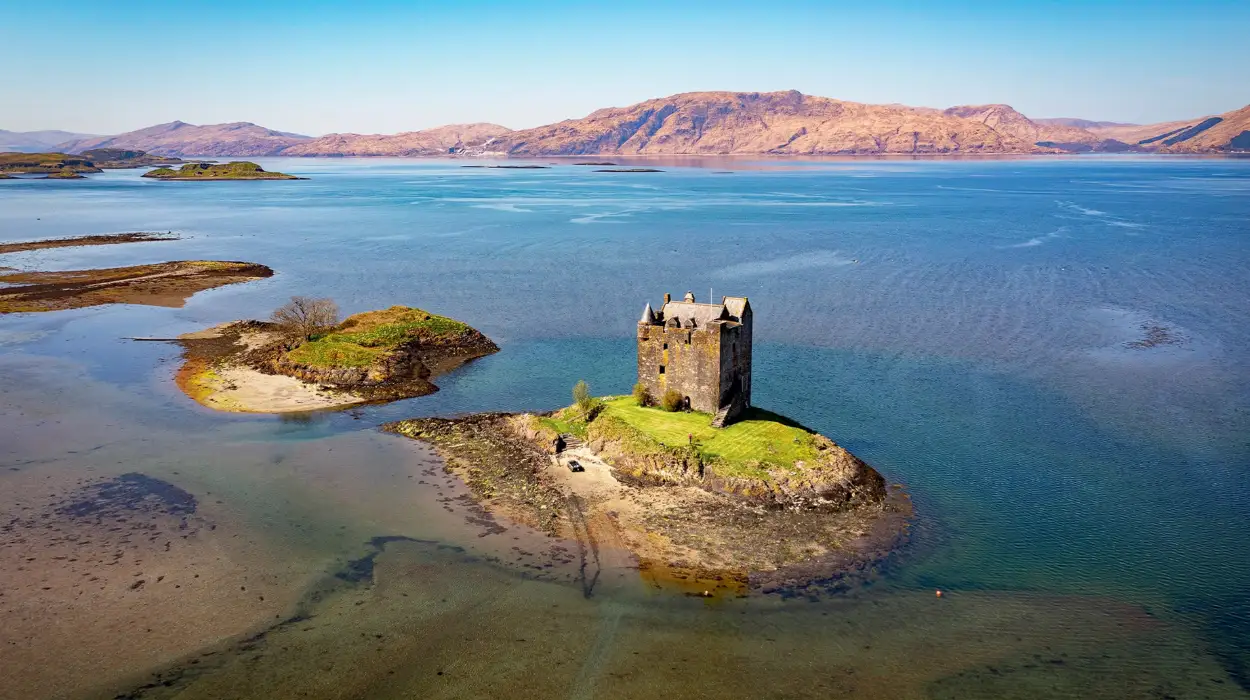
Scottish Highlands, a major physiographic and cultural division of Scotland, lying northwest of a line drawn from Dumbarton, near the head of the Firth of Clyde on the western coast, to Stonehaven, on the eastern coast. The western offshore islands of the Inner and Outer Hebrides and Arran and Bute are sometimes included in the division.
The northern portion of the Highlands lies within the Highland council area, while the southern portion belongs to the council areas of Argyll and Bute, Stirling, Perth and Kinross, Angus, Aberdeenshire, Aberdeen City, and Moray. Gaelic customs and language survive in the Highlands.
What are the Scottish Highlands
The Scottish Highlands is the Scotland of your imagination and the perfect backdrop for your next adventure. It’s no wonder that it was named as one of National Geographic’s “Best of the World” destinations in 2023. Explore the mysterious Loch Ness, pass through the striking Cairngorms National Park, walk up Britain’s highest peak, Ben Nevis, or discover the rugged coastline of Caithness.
Historical Geography of Scottish Highlands
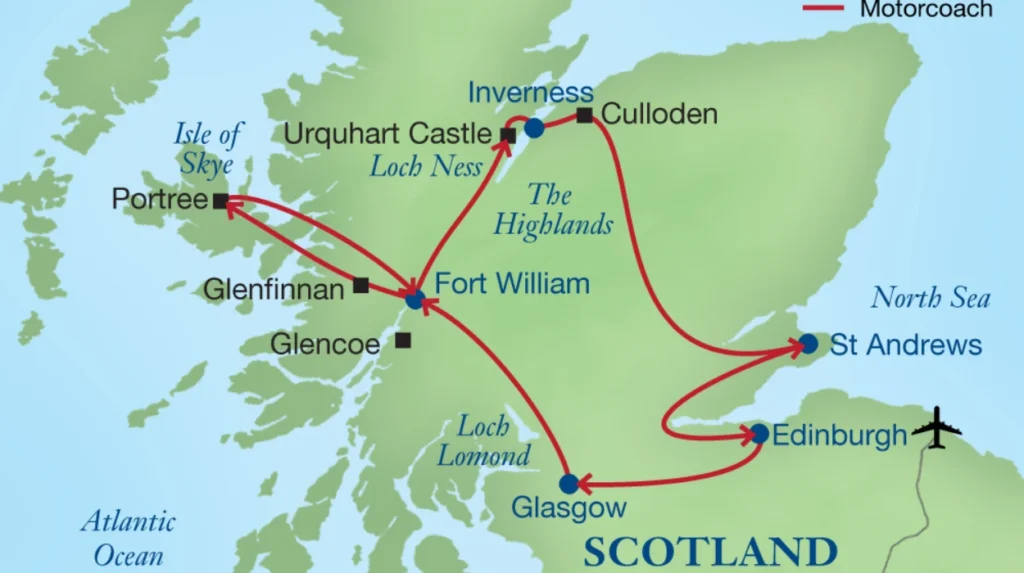
In geography, the Highland-Lowland boundary is related to the Highland Boundary Fault, which crosses mainland Scotland in a near-straight line from Helensburgh to Stonehaven. The flat coastal lands that occupy parts of the counties of Nairnshire, Morayshire, Banffshire and Aberdeenshire are excluded as they do not share the distinctive geographical and cultural features of the rest of the Highlands.
The north-east of Caithness, as well as Orkney and Shetland, are also excluded from the Highlands, although the Hebrides are usually included. The Highland area, as so defined, differed from the Lowlands in language and tradition, having preserved Gaelic speech and customs centuries after the anglicisation of the latter; this led to a growing perception of a divide, with the cultural distinction between Highlander and Lowlander first noted towards the end of the 14th century.
In Aberdeenshire, the boundary between the Highlands and the Lowlands is not well defined. There is a stone beside the A93 road near the village of Dinnet on Royal Deeside which states ‘You are now in the Highlands’, although there are areas of Highland character to the east of this point.
A much wider definition of the Highlands is that used by the Scotch whisky industry. Highland single malts are produced at distilleries north of an imaginary line between Dundee and Greenock, including all of Aberdeenshire and Angus.
Inverness is regarded as the capital of the Highlands, although less so in the Highland parts of Aberdeenshire, Angus, Perthshire, and Stirlingshire, which look more to Aberdeen, Dundee, Perth, and Stirling as their commercial centres.
Hotels in the Scottish Highlands
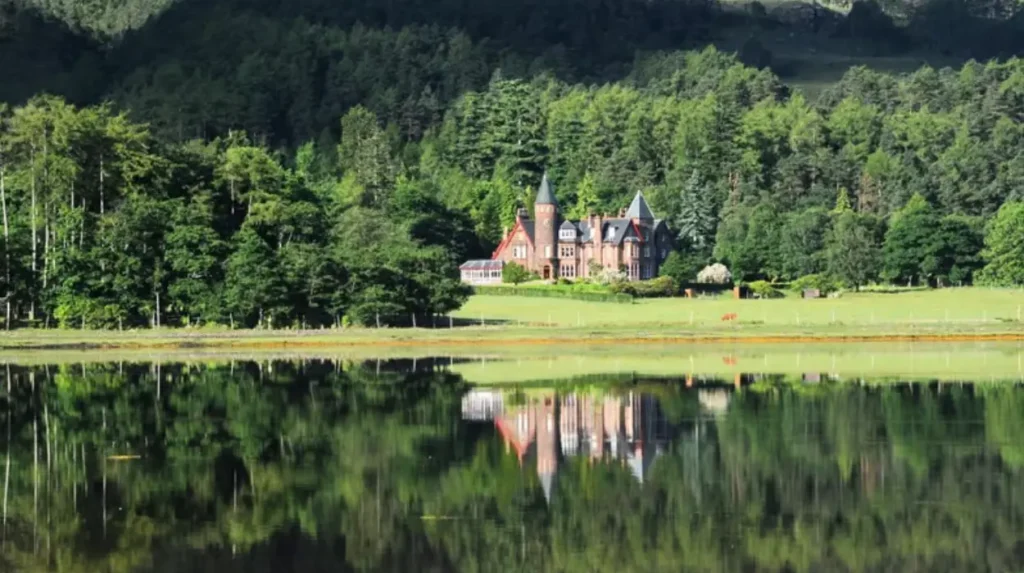
Accommodation options are vast in the Scottish Highlands, from private bed and breakfasts and inexpensive hotels to high-end lodges. The experiences can be quite diverse as well. Fort William and Inverness are the two main areas that are suitable to base yourself in.
From these centers, you can take day trips to the various places across the Highlands. It is always a good idea to check traveler reviews and things like parking, Wi-Fi, and breakfast if included.
In Inverness, I stayed at:
- Heathmount Hotel Inverness: A good walking distance from the town center, this hotel has a restaurant just downstairs. The rooms are new and modern and a good fit for a couple traveling.
- Glen Moriston Townhouse Hotel: I stayed in the two-bedroom apartment here, which was really quite lovely for a spacious stay. It was so nice to have a kitchen and a living room, and the complimentary breakfast at the restaurant was a wonderful bonus as well. It sits right along the river as well and is a short walk to the town center of Inverness.
In Fort William, I stayed at:
- The Lime Tree Hotel: This historic building hosts a lovely hotel. The downstairs has fireplaces which are great for the colder months and the rooms are cozy. The hotel also has one of the best restaurants in town, so be sure to book a table here!
Climate of the Scottish Highland
The region is much warmer than other areas at similar latitudes (such as Kamchatka in Russia or Labrador in Canada) because of the Gulf Stream, making it cool, damp, and temperate. The Köppen climate classification is “Cfb” at low elevations, then becoming “Cfc,” “Dfc,” and “ET” at higher elevations.
Culture of the Scottish Highland
Historically, the Highlands were distinct from the Lowlands of Scotland in several important ways. The primary language of the Highlands was established as Scottish Gaelic in the 10th century, and it dominated for centuries but has been in decline since the 1700s. In 1755, it’s estimated that 22.9% of the Scottish population were Gaelic speakers, but this was just 1.31% by 2022—an increase from 1.1% in 2011.
The Legacy of Gaelic Language and Song
Scottish Gaelic is the traditional language of Highland culture and the primary language of the Highlands for centuries, shaping Highland identity as we recognize it. It provided a vehicle for a rich oral heritage of poetry, song, and storytelling, which acted to preserve history.
Gaelic has suffered a major decline since the 18th century. There are now committed efforts to revitalize the language, and it is truly remarkable to see what is being done to help preserve and propagate it. Gaelic can still be heard in communities, especially in the Outer Hebrides, and the cultural value of Gaelic has now been defined in law.
Its visibility is present on bilingual road signs, and its presence can be heard in contemporary music, revealing a proud and abiding cultural continuity.
The Clan System
Another key way in which the Scottish Highlands differed from the Lowlands was the clan system. Although there were clans across Scotland, they were particularly important in the Highlands, where clans were the key to community and social order.
The Battle of Culloden
A major turning point for the clan way of life, however, was the Battle of Culloden in 1746. This battle—the last major battle fought on the British mainland—was the downfall of the Jacobite uprising.
The Jacobites were the supporters of King James VII of Scotland and II of England, and there was great support for the movement in the Highlands. However, the Battle of Culloden, where an estimated 1,500 Jacobites were killed, changed the face of the Highlands forever.
