
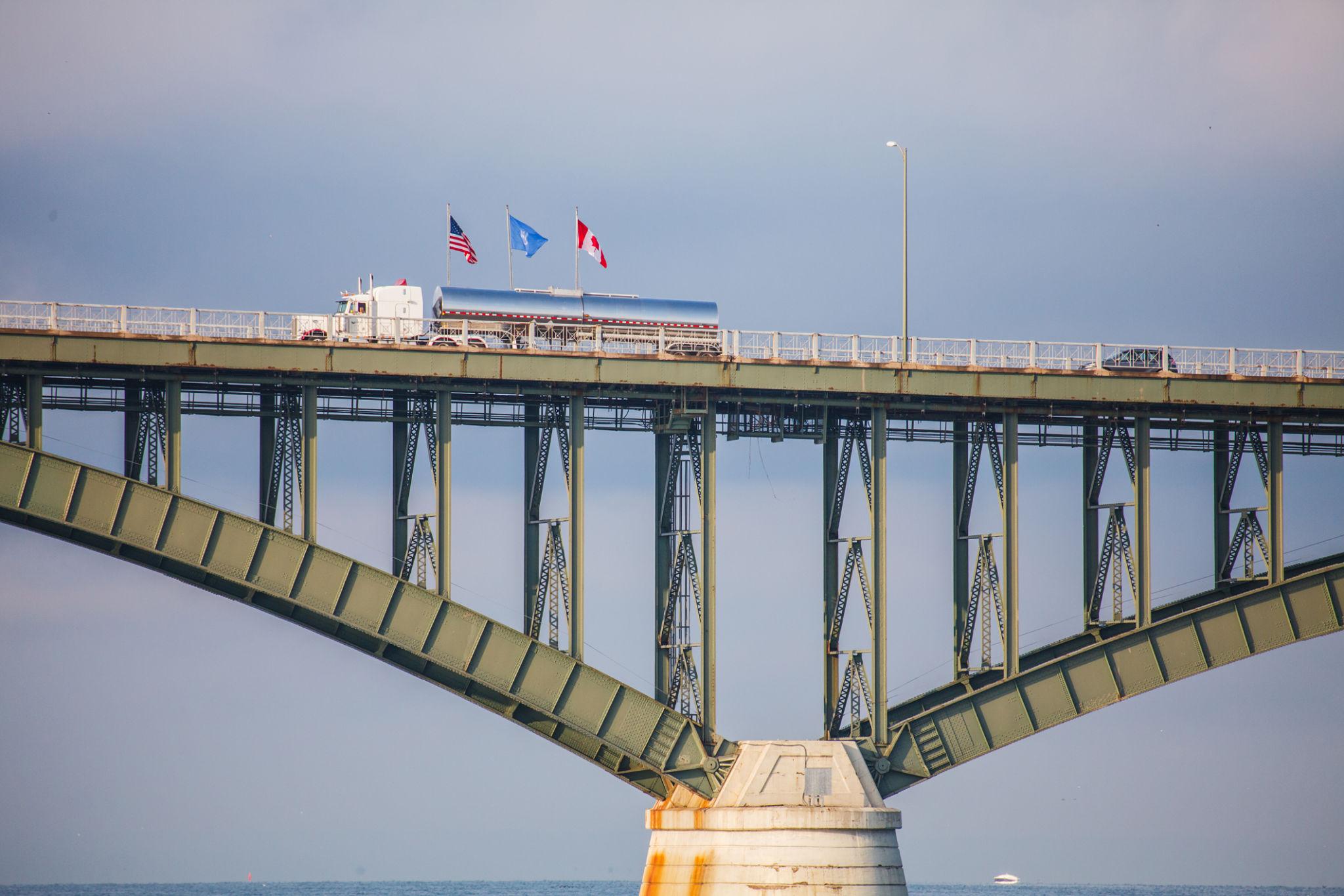
Washington, February 9, 2026, opened a new chapter in North American trade discourse as Parliament News highlighted mounting attention around the US Canada bridge block rhetoric that has surfaced amid renewed trade negotiations. The comments attributed to former US president Donald Trump have triggered intense political economic and diplomatic discussion at a time when cross border stability remains critical to both nations.
The development has drawn responses from policymakers business leaders and analysts who see the language as more than political theater. The timing location and tone have placed Washington at the center of a debate with far reaching implications for supply chains investor confidence and bilateral relations.
Strategic Importance of US Canada Trade Links
The United States and Canada share one of the most integrated economic relationships in the world. Millions of jobs on both sides of the border depend on uninterrupted trade flows supported by bridges railways and ports that connect manufacturing hubs and consumer markets.
In this context even symbolic discussion of a US Canada bridge block resonates deeply. Border infrastructure is not only physical but also represents trust reliability and long term cooperation. Disruptions whether real or perceived can influence corporate planning and government policy.
Political Signal Behind the Statement
The remarks that revived discussion of a US Canada bridge block align with a broader political strategy that emphasizes leverage and assertive negotiation. Trump has long argued that infrastructure access can be used to rebalance trade relationships which he views as uneven.
At a public appearance he said
“Strong borders and strong trade go hand in hand and we should never give leverage away for free.”
Supporters interpreted this as a call for firmness while critics warned that such framing risks escalating tensions unnecessarily.

Response From Canadian Leadership
Canadian officials responded with measured language emphasizing diplomacy over confrontation. Leaders in Ottawa underscored the importance of keeping trade corridors open and resolving disagreements through existing agreements.
They cautioned that introducing the concept of a US Canada bridge block into negotiations could undermine decades of cooperation. Canada’s position remains that stability and predictability serve both economies better than pressure tactics.
Business Community Reaction
Manufacturers logistics companies and retailers across North America reacted swiftly. Many rely on just in time supply chains that depend on seamless border crossings. The possibility of a US Canada bridge block raised concerns about delivery delays cost increases and contractual risk.
Industry groups urged both governments to avoid rhetoric that could unsettle markets. For businesses uncertainty alone can be as damaging as actual disruption.
Legal and Administrative Realities
Experts note that implementing a US Canada bridge block would face substantial legal and administrative barriers. International bridges are governed by treaties federal law and binational authorities that limit unilateral action.
Beyond legality practical enforcement challenges and economic consequences make such a move difficult to execute. Analysts widely view the discussion as rhetorical rather than imminent policy.
Market and Investor Sentiment
Financial markets showed caution following renewed trade tension headlines. Transport manufacturing and export oriented firms experienced short term volatility as investors assessed risk.
The mention of a US Canada bridge block introduced a new variable into economic forecasts reminding markets how sensitive trade dependent sectors are to political messaging.
Public Opinion in Both Countries
Public reaction has been divided. In the United States some voters see aggressive trade language as protective of domestic industry. Others worry about higher prices and strained alliances.
In Canada the rhetoric sparked debate over economic sovereignty and reliance on US infrastructure. The US Canada bridge block discussion has become part of broader political narratives in both countries.
Role of Infrastructure in Modern Trade Diplomacy
This episode highlights a shift in how infrastructure is discussed within trade diplomacy. Bridges ports and pipelines increasingly appear in political messaging as symbols of leverage.
Policy analysts warn that normalizing infrastructure threats such as a US Canada bridge block could alter international norms and encourage retaliatory measures elsewhere.
History of Border Trade Tensions
Trade disagreements between the United States and Canada date back decades. Disputes over lumber dairy steel and energy have periodically strained relations but were generally resolved through negotiation and arbitration.
What sets the current moment apart is the explicit reference to border access. The idea of a US Canada bridge block marks a departure from traditional tariff based disputes introducing physical connectivity into trade strategy for the first time in modern bilateral relations.

Economic Stakes for Border Regions
Border cities and regions stand to feel the greatest impact from trade uncertainty. Communities built around manufacturing logistics and warehousing depend heavily on predictable cross border movement.
Local leaders stress that even discussion of a US Canada bridge block can affect hiring investment and municipal planning as businesses reassess risk.
Diplomatic Implications Beyond Trade
The controversy extends beyond economics into diplomacy and security cooperation. The US and Canada collaborate closely on defense intelligence and environmental policy.
Diplomats warn that sustained focus on a US Canada bridge block could spill into other areas of cooperation complicating broader bilateral agendas.
Media and International Perception
International observers view the debate as a test of North American unity. Allies and trading partners are watching how the two countries manage disagreement given their reputation for stable cooperation.
The US Canada bridge block rhetoric has been noted in global media as an example of how domestic politics can influence international trade narratives.
Possible Paths Forward
Trade officials from both countries continue behind the scenes discussions aimed at easing tensions. Most analysts believe compromise remains likely given the depth of economic integration.
However the US Canada bridge block language has already altered negotiating dynamics making outcomes harder to predict.
Long Term Outlook for North American Trade
The episode may prompt renewed emphasis on supply chain resilience and diversification. Companies are increasingly exploring alternative routes and contingency plans once considered unnecessary.
In the long run the US Canada bridge block debate could accelerate investment in infrastructure redundancy and policy safeguards.
Balancing Rhetoric and Reality
While no formal action has followed the statements the impact of rhetoric is undeniable. Words alone have influenced markets public opinion and diplomatic tone.
The US Canada bridge block discussion serves as a reminder that political messaging can carry real economic weight even without policy implementation.
A Moment That Redefines the Conversation
This moment in Washington 2026 may ultimately be remembered less for what happened and more for what it revealed about modern trade politics. Infrastructure once seen as neutral now features prominently in negotiation strategy.
As both countries move forward the challenge will be balancing assertive policy with the cooperative foundation that has long defined US Canada relations.

Cross Border Trade at a Defining Crossroads
The debate surrounding the US Canada bridge block reflects deeper questions about leverage cooperation and economic interdependence. With livelihoods industries and alliances at stake the need for measured dialogue has rarely been clearer.
Whether this episode fades into rhetoric or shapes future policy will depend on choices made in coming months. For now it stands as a defining illustration of how trade infrastructure and politics have become inseparable in the modern era.