
Washington (Parliament Politics Magazine) – US President Trump has ordered a blockade of sanctioned Venezuelan oil tankers, escalating pressure on President Nicolás Maduro after recent tanker seizures.
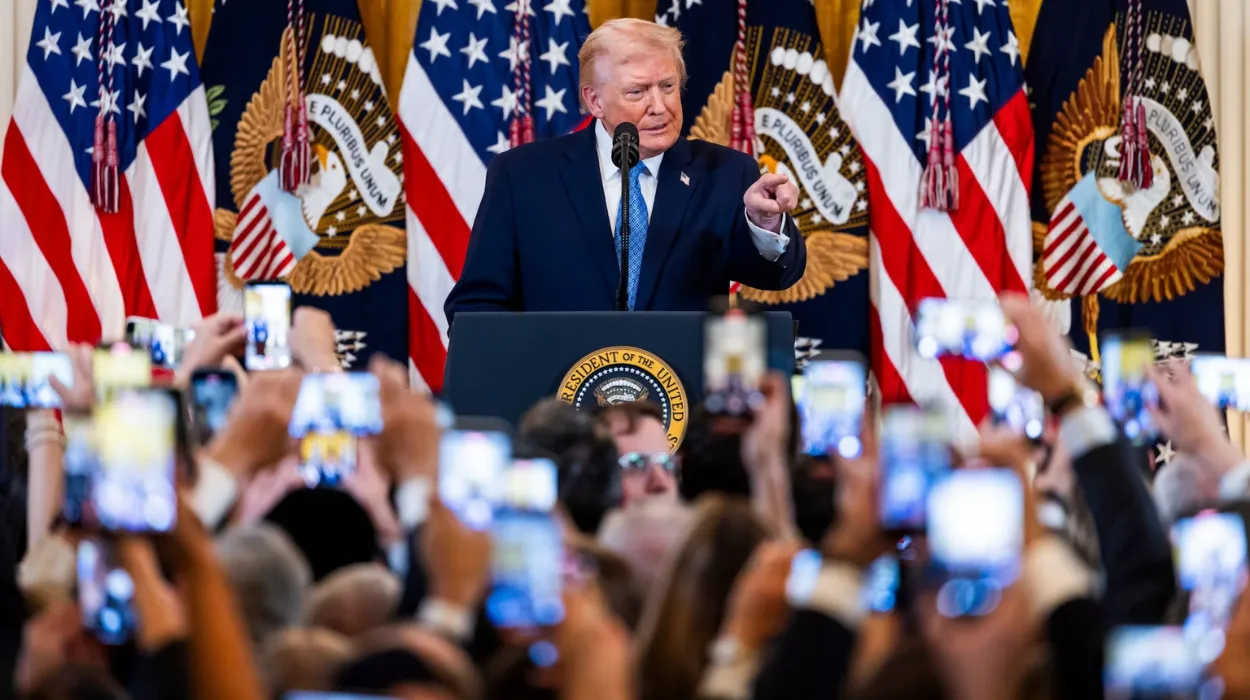
As reported by Cameron Henderson of The Telegraph, President Donald Trump said on Tuesday, 16 December, that the US would impose a “blockade” on all sanctioned oil tankers operating to and from Venezuela, in the latest move aimed at increasing pressure on Nicolás Maduro’s government.
Questions remain over how the Trump administration will enforce the measure, or whether the US Coast Guard will again be used to intercept sanctioned ships, following last week’s action.
The administration has deployed thousands of troops and nearly a dozen warships, including an aircraft carrier, to the region.
What did Donald Trump announce regarding sanctioned Venezuelan oil tankers?
Donald Trump said Venezuela’s oil was being used to fund drug trafficking and other illicit activities, while announcing a “total and complete” crackdown.
“For the theft of our Assets, and many other reasons, including Terrorism, Drug Smuggling, and Human Trafficking, the Venezuelan Regime has been designated a FOREIGN TERRORIST ORGANIZATION,”
the US president posted on Truth Social.
He added,
“Therefore, today, I am ordering A TOTAL AND COMPLETE BLOCKADE OF ALL SANCTIONED OIL TANKERS going into, and out of, Venezuela.”
— Rapid Response 47 (@RapidResponse47) December 16, 2025
President Trump alleged that Venezuela had taken control of US land for oil production, without providing specifics, and called for its immediate return.
“The illegitimate Maduro Regime is using Oil from these stolen Oil Fields to finance themselves, Drug Terrorism, Human Trafficking, Murder, and Kidnapping,”
he said.
Mr Trump added that the US
“will not allow a Hostile Regime to take our Oil, Land, or any other Assets, all of which must be returned to the United States, IMMEDIATELY.”
The Venezuelan government rejected President Trump’s move, calling it “utterly irrational” and a “grotesque threat.”
What did the US reveal about its crackdown on illicit Venezuelan oil networks?
President Trump’s comments come a week after US authorities seized a large, sanctioned Venezuelan oil tanker bound for Cuba.
Footage shows US troops taking control of the vessel, while helicopters hover overhead and armed forces rappel onto the deck.
Attorney General Pam Bondi said the operation targeted an “illicit oil shipping network” that was sending sanctioned Venezuelan oil to Iran in support of foreign terrorist groups.
According to Reuters, the US has reportedly compiled a list of additional sanctioned tankers for possible seizure. Last week, the Treasury imposed sanctions on six supertankers carrying Venezuelan crude.
US actions targeting Venezuelan oil threaten one of the country’s main revenue sources, marking the latest escalation following the largest US military buildup in the region in decades.
The move is the latest escalation following decades of US military buildup in the region. In recent months, the US has carried out 25 strikes on alleged drug-running ships in the Caribbean and Pacific, resulting in around 95 deaths.
Susie Wiles, the White House chief of staff, indicated in an interview published Tuesday that the president’s real aim is regime change.
She added,
“He wants to keep on blowing boats up until Maduro cries uncle. And people way smarter than me on that say that he will.”
What warnings did experts give about the impact of Trump’s Venezuela blockade?
US Representative Joaquin Castro, a Texas Democrat, described the blockade “unquestionably an act of war”.
He posted on X,
“A naval blockade is unquestionably an act of war. A war that the Congress never authorized and the American people do not want. On Thursday, the House will vote on @RepMcGovern, @RepThomasMassie, and my resolution directing the President to end hostilities with Venezuela.”
Mr Castro added,
“Every member of the House of Representatives will have the opportunity to decide if they support sending Americans into yet another regime change war.”
According to a former State Department energy official, failing to replace Venezuela’s affected exports with increased OPEC capacity could push oil prices up by $5–$8 per barrel.
He added,
“I would expect inflation to skyrocket, and massive and immediate migration from Venezuela to neighboring countries.”
How did Pete Hegseth respond to calls for releasing the unedited military footage?
US Defense Secretary Pete Hegseth said the Pentagon will not release unedited footage of a US strike that killed two survivors of a drug boat attack in the Caribbean, raising fears of a cover-up.
He indicated that members of the House and Senate Armed Services Committees would be able to review the video this week, but did not say if all members would have access.
“Of course we’re not going to release a top secret, full, unedited video of that to the general public,”
Mr Hegseth added.
Why is Donald Trump against Venezuela?
President Donald Trump escalated a multifaceted campaign against Venezuela and its leader, Nicolás Maduro.
The Trump administration has designated the Maduro regime as a Foreign Terrorist Organization, accusing it of leading the “Cartel de los Soles” to flood the U.S. with fentanyl and cocaine. The US military has conducted over 20 strikes on suspected drug vessels in the Caribbean and Pacific, resulting in dozens of deaths.
President Trump ordered a “total and complete blockade” of all sanctioned oil tankers entering or leaving Venezuela. He has demanded the return of “Oil, Land, and other Assets” he claims were stolen from the US, referencing the nationalization of oil industries under Maduro and his predecessor, Hugo Chávez.
