

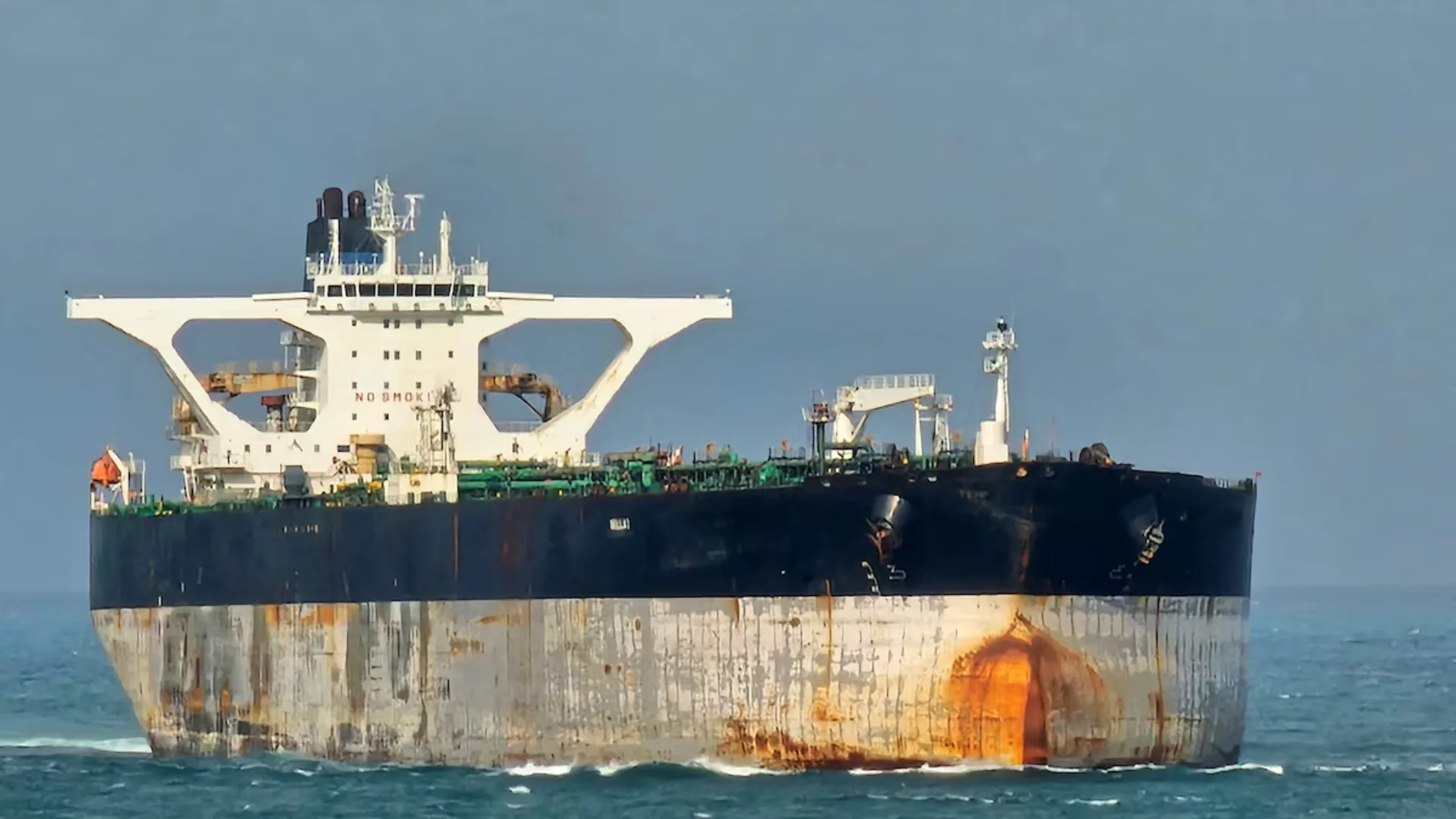
Moscow (Parliament Politics Magazine) – The US is reportedly attempting to seize a Russian-flagged oil tanker linked to Venezuela amid a week-long Atlantic pursuit near European waters.
As reported by Reuters, U.S. authorities are trying to seize a Russian-flagged oil tanker linked to Venezuela, after more than two weeks of pursuit across the Atlantic.
How did the U.S. attempt to seize a Russia-flagged oil tanker?
The U.S. move to take control of the Bella‑1, now operating under a new name, follows its successful slip past a U.S. maritime blockade and refusal to comply with Coast Guard boarding, escalating tensions with Russia.
An unnamed source said the U.S. Coast Guard and military carried out the operation. It seems to be the first recent attempt to seize a Russian-flagged ship.
Russian military ships, including a submarine, were reportedly close to the operation, though officials could not say exactly how near they were.
The Marinera, which had a different name before, is the latest tanker the U.S. Coast Guard is targeting as Washington increases pressure on Venezuela.
According to sources, another tanker linked to Venezuela was intercepted by the U.S. in Latin American waters, amid ongoing efforts to enforce an American blockade of sanctioned ships.
The development came days after the U.S. military launched a pre‑dawn raid in Caracas, capturing President Nicolás Maduro and transferring him to the U.S., where he was handed over to federal authorities to face drug‑related charges.
The U.S. military’s Southern Command posted on social media on Tuesday, 6 January, that it
“remains ready to support our US government agency partners in standing against sanctioned vessels and actors transiting through this region.”
He added,
“Our sea services are vigilant, agile, and postured to track vessels of interest. When the call comes, we will be there.”
What did Russia say about U.S. and NATO actions against its ship?
Reports say Russia sent a submarine and other ships to escort an oil tanker. U.S. forces are chasing the tanker across the Atlantic.
The tanker, sailing between Iceland and the British Isles, is accused of breaking U.S. sanctions by carrying Iranian oil. Although it has carried Venezuelan oil before, it is said to be empty
The Russian foreign ministry said,
“At present, our vessel is sailing in the international waters of the North Atlantic under the state flag of the Russian Federation and in full compliance with the norms of international maritime law.”
It added,
“For reasons unclear to us, the Russian ship is being given increased and clearly disproportionate attention by the US and Nato military, despite its peaceful status.”
Marine Traffic’s AIS location data placed the ship on Tuesday morning in the North Atlantic, roughly 300 km south of Iceland. Previous tracking revealed it had moved north, passing the western coast of Britain over the past two days.
What did experts say about ships changing flags to avoid U.S. sanctions?
Dimitris Ampatzidis, senior risk analyst at Kpler, said under international law, a vessel flying a country’s flag is protected by that nation, but changing a ship’s name or flag does not change its status.
He added,
“US action is driven by the vessel’s underlying identity [IMO number], ownership/control networks, and sanctions history, not by its painted markings or flag claim.”
Michelle Bockmann, a maritime analyst at Windward, said that altering a ship’s registry to Russia could complicate U.S. enforcement efforts.
She explained,
“Under the UN Convention of the Law of the Sea, there’s a provision that allows a stateless vessel to be boarded by authorities. By reflagging to Russia, the vessel is no longer able to be boarded under this provision.”
Why did the U.S. capture Venezuela’s President Maduro?
The U.S. conducted a military operation in Venezuela on January 3, capturing President Nicolás Maduro. The operation, code‑named “Operation Absolute Resolve,” took place in Caracas before Maduro was transferred out of the country.
America said its actions target law enforcement and fighting “narco-terrorism.” Officials claim Maduro faces criminal charges for cocaine trafficking and leading a “state-backed drug operation.”
The operation drew mixed responses. Support came from Argentina and U.S. allies, opposition from Latin American nations, the EU, and Maduro’s partners. The domestic U.S. reaction was partisan.
