

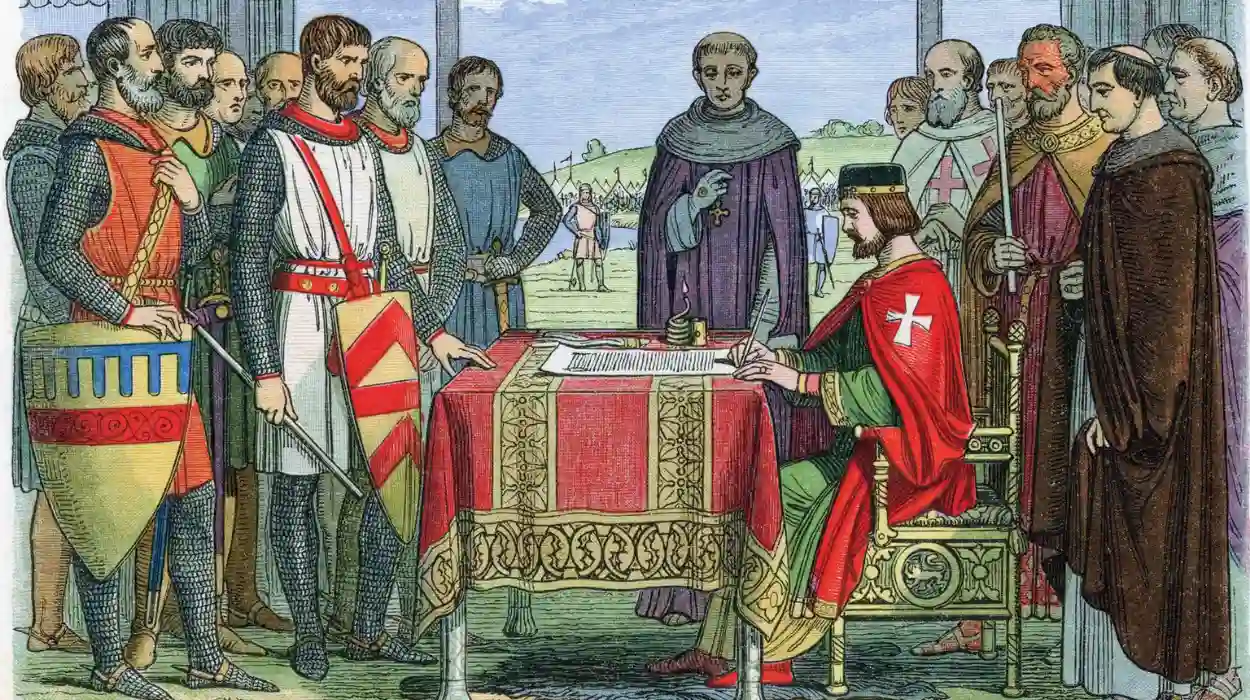
When people mention freedom, democracy, or human rights, one name comes up: the Magna Carta. But what is the Magna Carta? This well-known document signed in England over 800 years ago is said to be the first step in developing the tradition of liberty and the rule of law. Although it was written in 1215, it still rings out in legal systems, constitutions, and the concept of justice all over the world.
What Is the Magna Carta?
The Magna Carta, which means “Great Charter” in Latin, was a written mutual agreement between King John and his barons. The idea is largely viewed as a peace agreement between the barons and the king. However, it involved establishing rules that King John had to obey.
Key Concepts
The Magna Carta lists a few key concepts:
- The king could not tax people without their consent.
- Nobody was above the law, not even the king.
- Free men had a right to a fair trial.
- The church had freedom from the king.
A revolutionary step: At the time, the concept that a king could be restrained by law was revolutionary. This is also why the Magna Carta is remembered as an important moment in history.
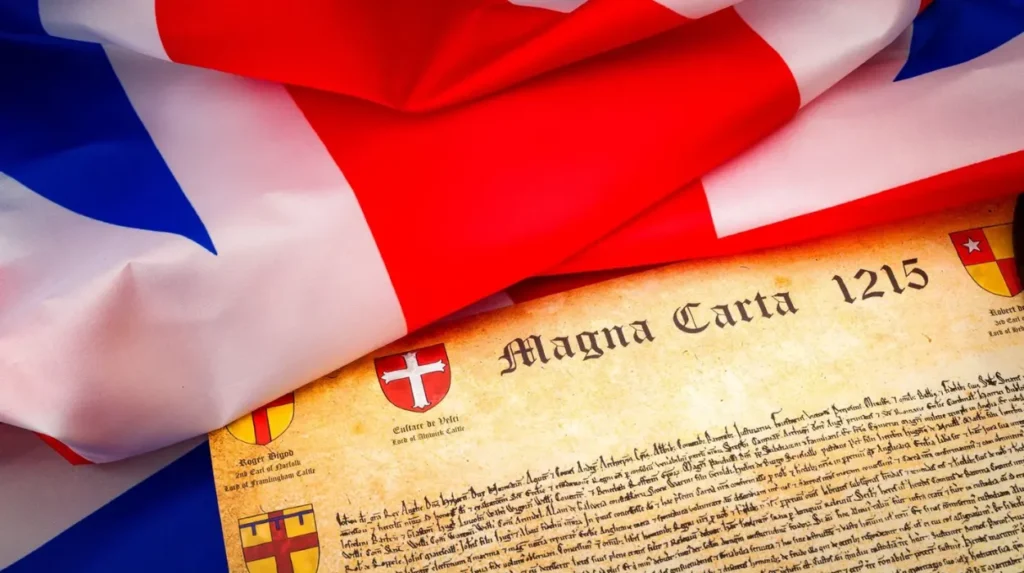
Why Was the Magna Carta Important?
Before the Magna Carta, royal power was almost absolute. The charter represented King John’s acceptance that he had limitations to his power. This was a radical concept that has contributed towards constitutional government.
The Magna Carta laid the foundation for protecting the rights of noblemen and, in the long run, rights for the common person. It applied the idea of documenting or writing down rights and contributing to the idea of defending rights.
The Magna Carta established the principle of justice. Specifically, the important notion that no free person could be imprisoned without a fair trial. This fundamental principle continues to guide justice systems around the world today.
The Legacy of the Magna Carta
It includes short- and long-term impacts; these are
The Short-Term Impact
In 1215, the Magna Carta did not take hold for long. Within weeks, Pope Innocent III annulled the document, siding with King John. A civil war broke out. But despite these early hurdles, the Magna Carta was reissued several times.
The Long-Term Impact
Over time, the Magna Carta became much more than a peace treaty. It evolved into a symbol of liberty. The charter was adopted and used by lawyers, politicians, and ordinary citizens to defend their freedom. The Magna Carta directly influenced many important documents, including
- The English Bill of Rights (1689)
- The American Declaration of Independence (1776)
- The United States Constitution (1787)
In each of these examples, we can see the echoes of the Magna Carta, limitations to power, rule of law, and rights of citizens.
The Magna Carta and Modern Liberty
- Democracy and the Rule of Law: When thinking about what the Magna Carta means in modern terms, we can say that it is a foundational part of democratic government. The notion that leaders must adhere to the law is fundamental to democracies in contemporary society.
- Human Rights Movements: The Magna Carta also laid the foundation for human rights. The idea of fair trials and protection from unlawful imprisonment were some of the main influences behind the Universal Declaration of Human Rights in 1948.
- A Living Symbol: The Magna Carta was written many centuries ago, but it continues to live on, inspiring us every day. Copies of the Magna Carta are on display in museums, studied in schools, and referenced in courts. It is not just a piece of paper; it symbolizes the quest for freedom.
Common Misconceptions about the Magna Carta
When the Magna Carta was first signed, it applied to nobles and not regular people. Over the decades, the spirit of the Magna Carta was gradually extended to everyone.
The Magna Carta was not a complete constitution. It was a catalogue of promises by the king made under duress that became important later when people redefined its importance. Many people consider the Magna Carta as little more than a medieval relic. On the contrary, its concepts remain active whenever freedom and justice are engaged.
How the Magna Carta shaped the future
- In England: In England, the Magna Carta served as a foundation for the birth of Parliament. It demonstrated that a king would not govern unless he had consulted and agreed with people.
- In America: In colonial America, leaders frequently used the Magna Carta as confirmation that liberty was an ancient right. It became powerful evidence for revolutions.
- Throughout the World: Throughout the world, the Magna Carta is a symbol of mankind’s universal quest for freedom and inspired constitutions in countries far beyond Europe.
The enduring symbolism of the Magna Carta
The Magna Carta was a promise. It was the first time that a king ever openly admitted that he had limits. The promise gave people the hope of fairness. The Magna Carta has been a reference point whenever people have fought against oppression. It reminds us that freedom is not freely given; it must be defended. People still debate the Magna Carta today for one reason: it has a legacy of hope. It shows that change can happen, regardless of how great the power.
The Magna Carta: A Lasting Symbol of Freedom
What is the Magna Carta? It is much more than a piece of parchment sealed in 1215. It is the foundation of modern freedom. Furthermore, it limited the rights of kings, protected the rights of people, and integrated the rule of law into our societies, providing the foundations for democracy and justice.
The impact of the Magna Carta is felt today in legal systems, constitutions, and human rights movements around the world. What began as a negotiated document for barons in medieval England grew to be a symbol for all people.
The Magna Carta serves as a reminder that freedom, justice, and fairness are not ideas belonging to the past. They are living ideas, principles, and values that continue to shape our world today.
