

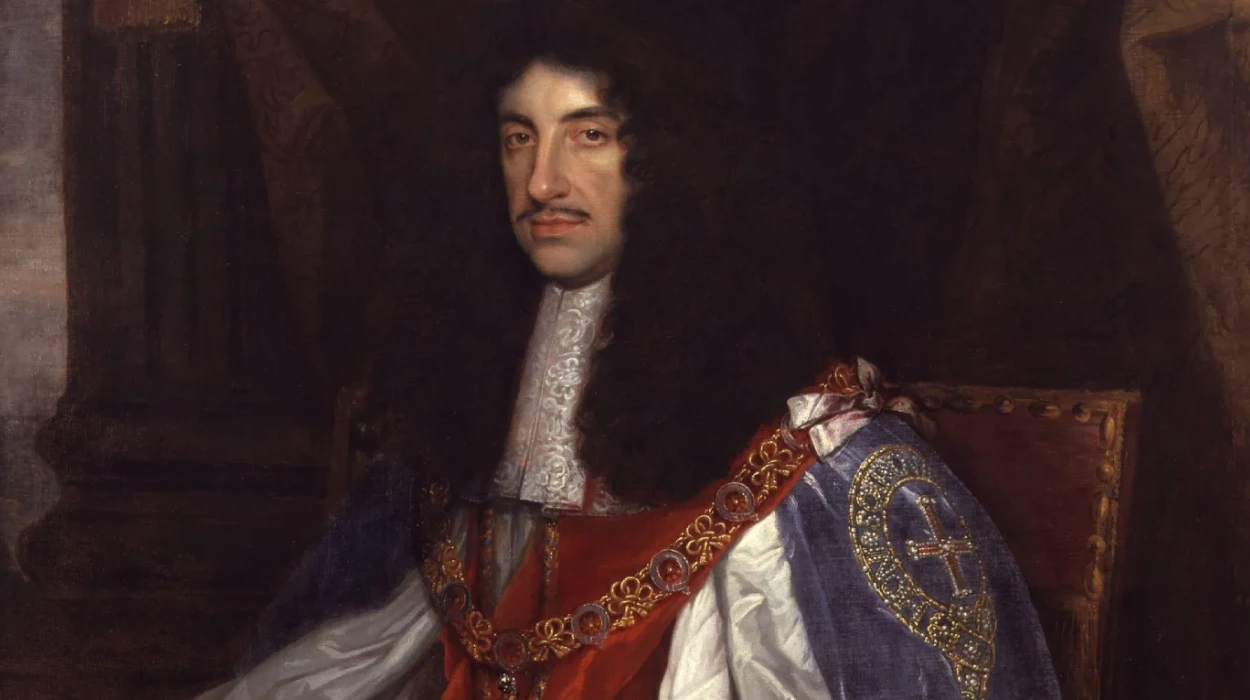
There are few dramatic upturns in British history as extraordinary as the restoration of the crown following a bloody civil war and decade of republicanism. While the execution of Charles I in 1649 was a world-changing moment and a clear expression that a nation could dissent from monarchical rule, less than eleven years later, in 1660, a monarchy was restored to public acclaim.
This raises something of a pressing question: Why did England restore the monarchy? After attempting to eradicate it?
The answer cannot be confined to one reason, but a perfect storm of political disappointment, social upheaval, and a well-developed appetite for stability. Becoming a monarchy in 1660 was not a popular vote for absolutism but a practical choice to escape the chaos of the Interregnum. It was a conscious choice of a familiar agency rather than an uncomfortable and tyrannical trial.
The Demise of the Republican Dream: Oliver Cromwell’s Legacy
To understand the restoration of the monarchy, we first have to understand what exactly it was. The time between the execution of Charles I and the return of Charles II, known as the Interregnum, was far from the stable and free republic it was advertised to be by its creators.
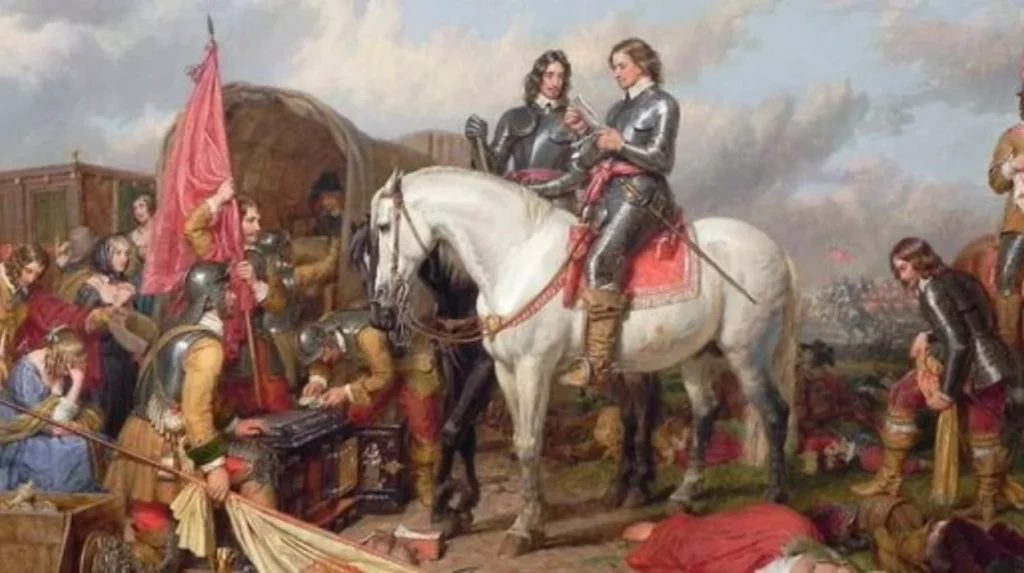
The Rule of Oliver Cromwell: Lord Protector, Not King
Olivier Cromwell, the Commonwealth’s leading man, turned out to be more authoritarian than any of the kings of the Stuart line. A Lord Protector, Cromwell was sustained by the army and created a military dictatorship. He was smart enough to refuse the crown itself; he embodied monarchical power. He dissolved parliaments when they would not obey him, and he divided the country into regions ruled by major generals who made sure that strict Puritan laws were adhered to.
Economic Distress and Social Repression
The Commonwealth and Protectorate were unable to deliver national and individual prosperity. The wars were astronomically costly, and the heavy taxes that existed to provide for the enormous standing army remained.
The strong social code enforced by the Puritan leadership tended to disallow many pleasures of life; no celebrations of Christmas or sports were necessary exclusions, resulting in a profound cultural loss and resentment.
The people of England had fought for greater liberty and social freedom only to find themselves under a regime that, in many respects, was just as controlling as the ceremonial monarchy it had replaced. The hope for a free commonwealth had warped into a reality of repression and economic despair.
The Power Vacuum
The tenuous system Cromwell created was entirely predicated upon his forceful personality, political deftness, and military prestige. As a result, Cromwell’s death in 1658 left a vacuum that no other could replace, ushering in the subsequent restoration of monarchy.
The Ineffective Leadership of Richard Cromwell
Richard Cromwell was named as successor to his father, but without his father or the respect of the army, he was entirely unsuited to lead. Without their loyalty, Richard’s position collapsed quickly, and he was forced to resign in 1659, leaving the country rudderless and entering a period of political uncertainty. The rapid collapse of Richard’s rule illustrated that the Protectorate was an unstable form of government, for it was not government at all: it was a personal rule that died with the person.
Army and Political Factions
In the absence of centralized authority, the army splintered into competing factions. Generals and politicians vied for their interests in the interim authorities. The Rump Parliament avoided being resurrected and was dismissed once again.
The country avoided returning to the brink of a civil war, though internal frictions revealed there were divisions across more republican factions. For both the propertied classes and the general populace, the renewed politics proved terrifying.
To contemplate a return to civil war somewhere down the road, again and completely in line with the breakdown of law and order, made the thought of going home to a known and established monarchy so deeply appealing. The most significant reason. England returning to monarchy was the desperate desire to return to ambiguous constitutional structures instead of being on the brink of total anarchy.
The Significance of George Monck and the Purposeful Action
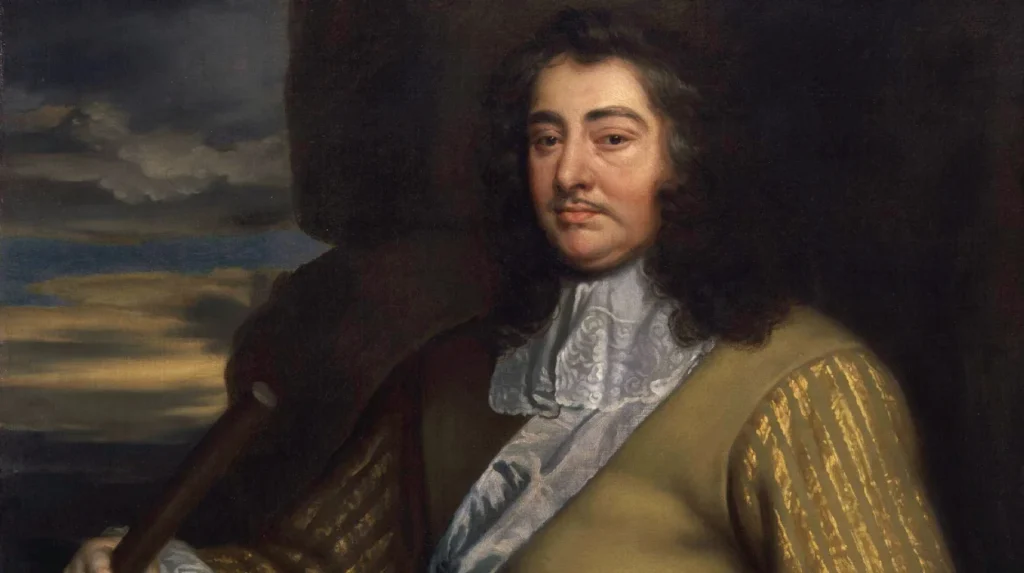
In the southwestern and southeastern corners of the nation, one figure emerged as the kingmaker, and that’s George Monck, the commander of the army in Scotland. Monck was a practical professional soldier, having served both the King and the Protectorate. His decisions were now the practical response to the question of why England restored the Monarchy?
The March to London
In early 1660, Monck marched south, with well-disciplined troops, towards London to witness the political anarchy in person. Monck did not explicitly suggest he desired to restore the king but said he was acting to provide a free and full parliament. His arrival in London ended the power vacuum and began a restoration of order.
Engineering a Free Election
Monck made a clever move to bring back the Long Parliament but only on the condition that it would vote itself back and call a new election. This was important because the “Rump” Parliament was an unrepresentative part of the political nation.
The new election and the Convention Parliament were the first new elections in over twenty years controlled not really by the army and the Puritan interests. It was composed of many members who were overwhelmingly Royalist sympathizers, including many Presbyterians who had previously fought on the King’s behalf but now regarded monarchy as a way of achieving stability.
The Declaration of Breda: A PR Masterclass
Monck was establishing power in London, and Charles Stuart (the exiled heir to the throne) was representing the monarch’s interest in the Dutch city of Breda. He and his advisors cleverly recognized that he needed to provide assurances in order for him to be allowed back.
The Declaration of Breda, issued in April 1660, was the promissory note that made the political restoration possible. This was a declaration of reconciliation, not a declaration of victory. In it, Charles promised:
A general pardon for all past wrongs committed during the civil wars and Interregnum, with a deadline for supporters to sign the pledge and register their loyalty within forty days.
Religious toleration, with respect for “tender consciences,” meant that Parliament and not the sovereign would make decisions over religious matters. Property had been sold off following the republican government and will be assessed by Parliament. Arrears payments to the army, which taught them that they would still be paid and therefore would not revolt.
The brilliance of the Declaration of Breda was that it kicked the most contentious issues over to Parliament. It also managed to remove and inscribe both fears of irresponsible bloodshed and fears of wholesale land confiscation that would accompany a political conquest. Finally, it made the restoration look peaceful, so it was presented as a negotiated settlement, and that made the restoration seem attractive to a larger audience.
A Nation Craving “Normality” and Legitimacy
Outside the high politics and military operations, there was a powerful public sentiment that simply said, Give us back our king.
The Collapse of Puritanism
The Puritan regime had created a tremendous backlash. There were many who were simply done with the joyless, dour society created by the major generals. There was a hankering for the holidays, theaters, and pre-1642 leisure pursuits. The restoration of the monarchy was inextricably bound in the public mind with the restoration of fun and culture. This was best summed up, and a sometimes licentious period followed it, known as the “Restoration.”
The Ancient Constitution and Divine Right
The monarchy was a deep-seated concept in English law, society, and psychology, despite the Civil War. The royal government, with its hierarchy of king, lords, and commons, was conceived of as the ‘ancient constitution’ and the natural order of things.
A decade of military generals and unelected parliaments felt illegitimate. The monarchy represented a return to being backed by the weight of stigma, history, tradition, and legal precedents. For the masses the principle of divine right, lessened, still retained a powerful symbolic and emotional draw that no military tyrant could emulate.
A Pragmatic Restoration Without Triumph
The restoration of the monarchy was no rejection of the struggle with Charles I; it was a rejection of the unsuccessful experiment that followed. The Interregnum revealed that governing without a king (in this historical moment) was messier than governing with one. Rule by martial law, repression of social discontent, and neglect of economic hardship result in livelihood insecurity leading to the threat of total breakdown as a society.
The restoration was a conservative revolution. A decision for a more conservative restoration represented the option for stability, tradition, and certainty of law in favor of the chaos that emerged from disjointed republicanism.
The returned King Herbert, Charles II, was clearly aware of this distinction. The “Settlement” ensured that the restored monarchy would not be the absolute monarchy that his father would have desired. Rather, it was a system of monarchy with limits placed by Parliament, learned the hard way over the previous two decades of the Great Civil Wars and Interregnum.
When Charles II returned in May 1660, what was celebrated was not because the English were loyal supporters of monarchy, but because they were exhausted, fearful, and eager to find the point at which their flawed dream could separate from restoring a solid reality. They chose the devil that they knew over the deep blue sea filled with a fractured republic, and they made a choice that would influence the British constitutional monarchy for centuries to come.
