Moscow (Parliament Politics Magazine) – Ukrainian drones attacked oil and energy facilities in Krasnodar and Tatarstan, triggering fires, with no casualties reported.
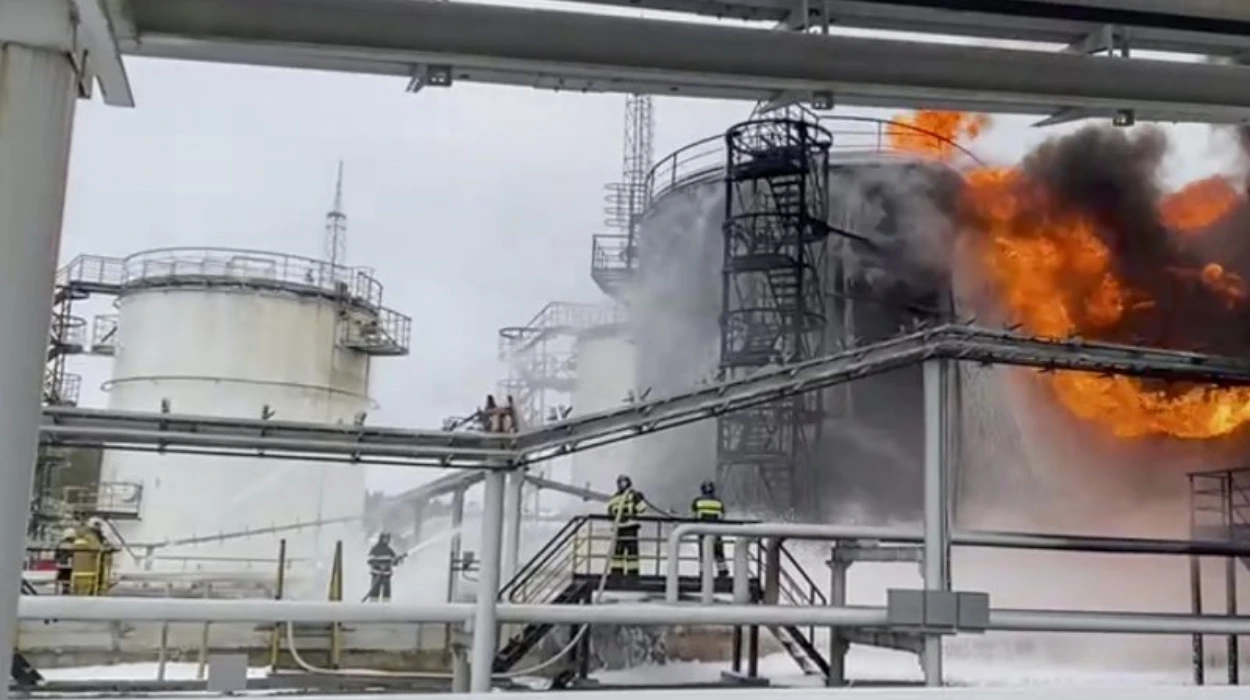
As reported by Reuters, Ukrainian forces carried out strikes on an oil refinery in Krasnodar and an energy facility in Tatarstan, officials from both sides confirmed Thursday.
How are Ukrainian drone strikes impacting Russian energy facilities?
Russian media cited the Almetyevsk governor, saying Ukrainian drones struck an energy storage facility, causing a fire that has since been controlled.
According to local authorities, drone debris struck the Ilskiy oil refinery in Krasnodar, sparking a fire, but no casualties were reported.
On Thursday, Ukraine’s armed forces confirmed they struck Russian energy facilities in Krasnodar and Tatarstan during overnight operations.
Russian drone attacks targeted Ukraine’s power infrastructure, affecting several regions, with Volyn alone losing electricity in more than 103,000 households, officials said.
According to Ukraine’s energy ministry, 170,000 people are without power after Russian strikes hit local energy infrastructure. Emergency repairs are underway, four apartment buildings were damaged, and six people, including three children, were injured.
The attacks came as Ukraine’s President said in his New Year’s Eve address that Kyiv is
“10 per cent from a deal to end the conflict,”
but it “would not be at any cost,” with Ukraine also exploring hosting US troops as part of talks with US President Donald Trump.
What did Ukraine and Russia say about the war in their New Year’s addresses?
Ukraine’s President Volodymyr Zelensky said on New Year’s Eve that Kyiv wants the war to end, but would not sign a “weak” peace deal.
He said,
“What does Ukraine want? Peace? Yes. At any cost? No. We want an end to the war but not the end of Ukraine. Are we tired? Very. Does this mean we are ready to surrender? Anyone who thinks so is deeply mistaken.”
President Zelensky stated that any deal
“placed on weak agreements only fuel the war. My signature will be placed on a strong agreement. And that is exactly what every meeting, every phone call, every decision is about now.”
Russian President Vladimir Putin called the ongoing war “a struggle for Russia” in his New Year’s address, showing determination to continue despite international criticism.
In a nationwide address, President Putin praised troops, saying,
“We believe in you and our victory,” while promising continued support for Moscow’s “special military operation.”
How is Ukraine planning the next steps to end the war?
US Special Envoy Steve Witkoff said President Trump’s advisers held talks with Ukrainian President Zelensky and national security officials from the UK, France, and Germany to plan steps toward ending the conflict with Russia.
Witkoff added,
“We focused on how to move the discussions forward in a practical way on behalf of @POTUS’ peace process, including strengthening security guarantees and developing effective deconfliction mechanisms to help end the war and ensure it does not restart.”
US Secretary of State Marco Rubio, President Trump’s son-in-law Jared Kushner, and Ukraine’s chief negotiator Rustem Umerov also took part in the discussions.
President Zelensky told reporters that national security advisers from Kyiv’s coalition partners will meet in Ukraine on Saturday, ahead of a leaders’ summit in France on Tuesday, 6 January.
How many people have died in Ukraine since the war started?
The latest official figures indicate that around 140,000 soldiers have died since the invasion began, surpassing previous government estimates. Estimates put Russian soldier deaths between 243,000 and 352,000, with around 160,000 confirmed by name, suggesting a significant undercount.
Ukrainian daily military reports indicate total Russian casualties, including killed and wounded, may be about 1.2 million by early 2026. UN data confirms that at least 14,116 civilians have been killed, but officials warn the actual number is likely much higher.