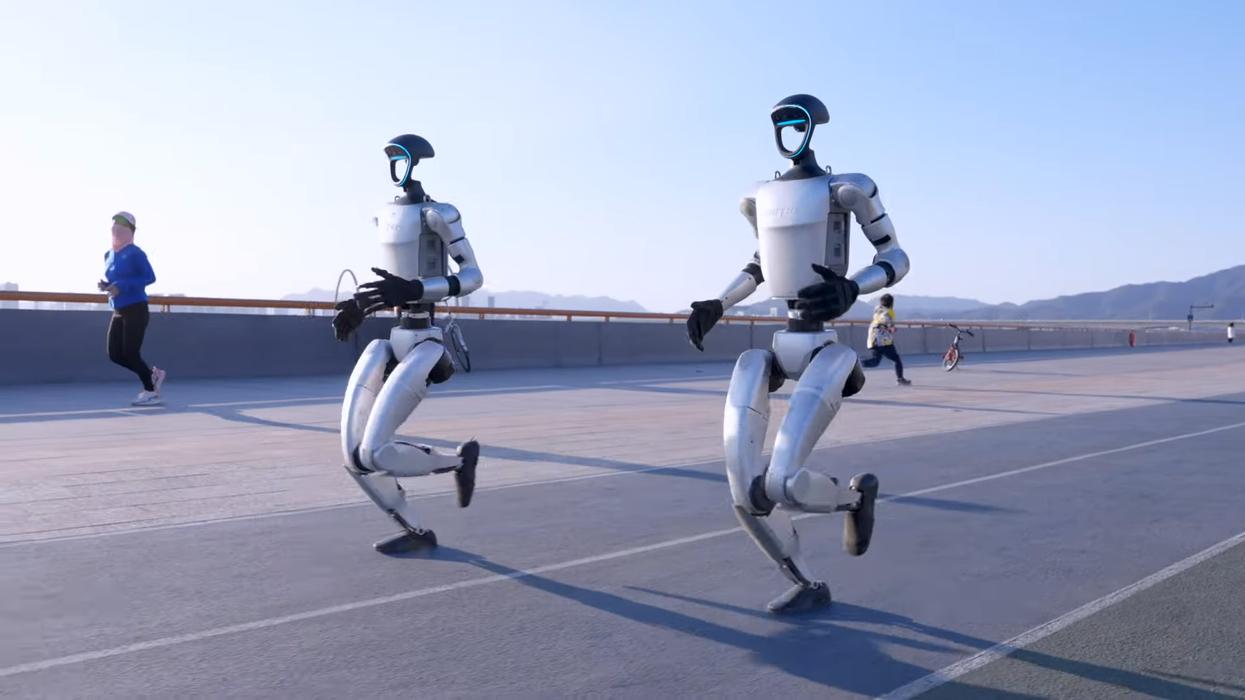
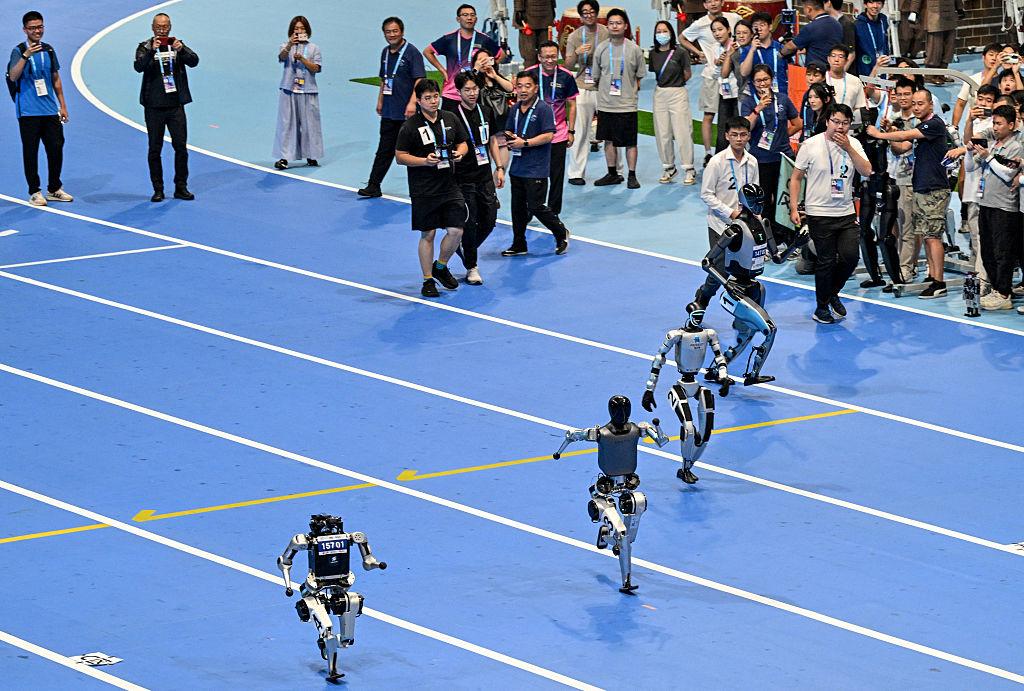
Beijing, April 19, 2026 (Parliament Politics Magazine) Artificial intelligence sports became a defining headline in 2026 as a historic event unfolded in Beijing, where humanoid robots competed in a half-marathon alongside human runners. The competition, once considered futuristic, has now become a tangible demonstration of how artificial intelligence is reshaping athletic performance and redefining competition.
The event brought together leading robotics developers, engineers, and artificial intelligence researchers, all aiming to test the limits of machine capability in real-world environments. What stood out most was not just participation—but performance. Several humanoid robots maintained speeds and endurance levels that rivaled, and in some cases exceeded, those of human runners.
One attendee described the moment as,
“a powerful example of how artificial intelligence is no longer confined to labs—it’s stepping directly into human experiences.”
Structure of the Race and Technology in Motion
The artificial intelligence sports event followed a traditional half-marathon format, with robots and humans navigating the same course. Unlike earlier demonstrations, these robots operated autonomously without direct human control.
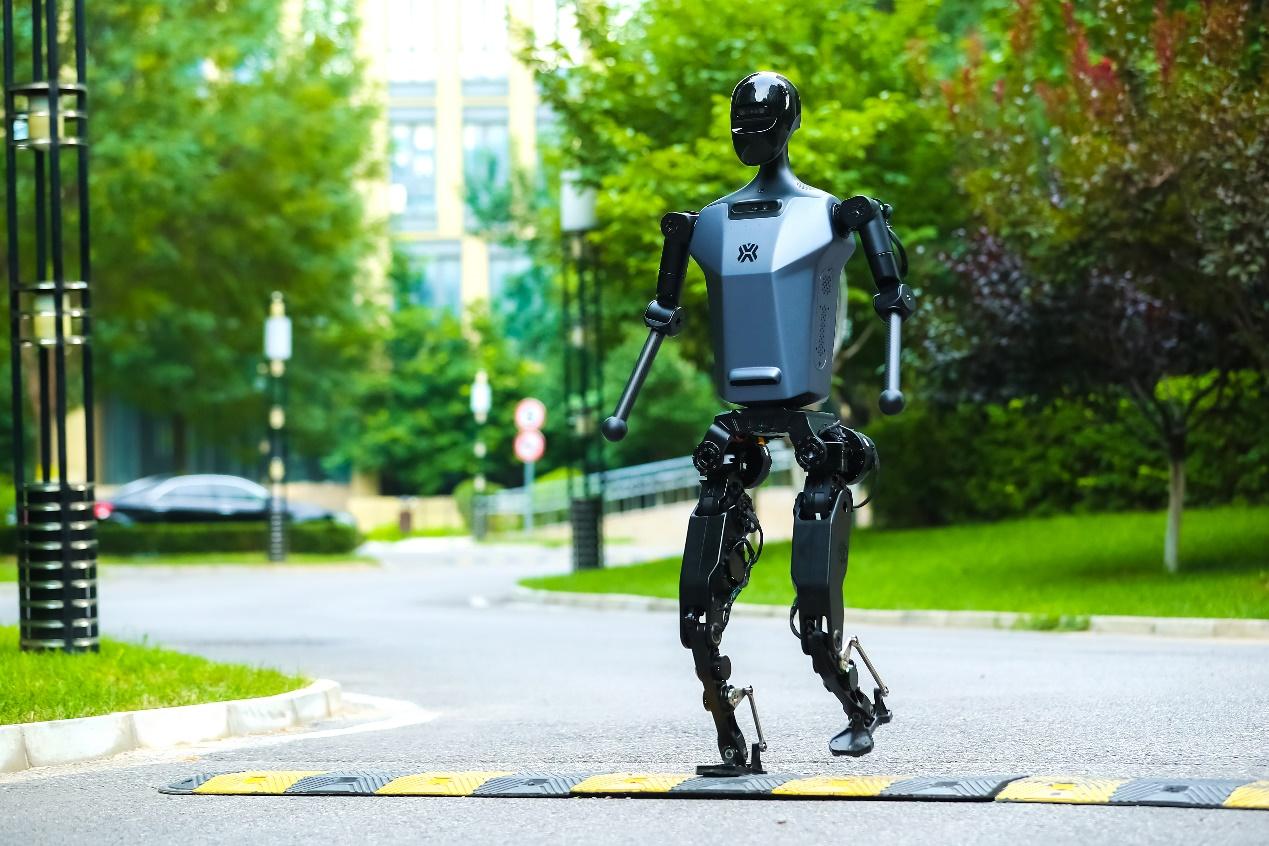
Equipped with advanced sensors, real-time data processing systems, and machine learning algorithms, the humanoid robots adapted to terrain, adjusted pacing, and responded to environmental variables. This level of autonomy represents a major leap in robotics engineering.
The ability to sustain balance, maintain speed, and avoid obstacles showcased how far artificial intelligence sports has progressed in recent years.
A Breakthrough Moment for Artificial Intelligence
Artificial intelligence sports is no longer a concept—it is an emerging category that blends athletic performance with advanced computing. The Beijing race highlighted how AI-driven systems can now function effectively in dynamic, unpredictable environments.
Historically, robots were limited to structured settings such as factories or controlled testing areas. However, this event demonstrated that machines can now operate in open, real-world conditions with a high degree of efficiency.
A robotics expert at the event noted,
“This is a defining moment. Artificial intelligence sports is proving that machines can perform complex physical tasks in real time, under real conditions.”
Human Performance vs Machine Precision
The artificial intelligence sports competition also revealed important differences between human and machine capabilities. While robots demonstrated consistent speed and endurance, human runners continued to excel in adaptability and strategic decision-making.
Humans rely on instinct, emotional resilience, and situational awareness—qualities that machines are still developing. However, robots possess advantages in areas such as fatigue resistance and precision.
This contrast suggests that the future of artificial intelligence sports may not be about replacement, but rather coexistence and collaboration.
Key Innovations Driving Artificial Intelligence Sports
Several technological advancements played a critical role in the success of the Beijing race:
Autonomous Navigation Systems
Robots used AI-powered navigation to interpret surroundings and make decisions without human input.
Biomechanical Engineering
Design improvements allowed robots to replicate human movement more accurately, resulting in smoother and more efficient running patterns.
Real-Time Data Processing
Artificial intelligence systems processed environmental data instantly, enabling robots to react to obstacles and terrain changes.
Energy Optimization
Improved battery efficiency allowed robots to sustain performance over long distances, a critical factor in endurance-based events.
Global Impact of Artificial Intelligence Sports
The rise of artificial intelligence sports is expected to influence industries far beyond athletics. Governments, corporations, and research institutions are closely monitoring these developments.
Applications could extend into healthcare, logistics, defense, and emergency response. Humanoid robots capable of physical endurance and adaptability could assist in environments where human limitations are a factor.
However, the rapid growth of artificial intelligence sports also raises questions about ethics, employment, and regulation. As machines become more capable, societies will need to address how these technologies are integrated responsibly.
Public Reaction and Industry Perspective
The Beijing event generated widespread global attention. Videos of humanoid robots running alongside humans quickly circulated online, sparking both excitement and debate.
Many viewed the event as a symbol of innovation and progress, while others expressed concerns about the pace of technological advancement. Despite differing opinions, industry leaders largely see artificial intelligence sports as a positive development.
A technology executive stated,
“This isn’t about competition—it’s about evolution. Artificial intelligence sports is opening doors to possibilities we never imagined.”
The Future of Artificial Intelligence Sports
Artificial intelligence sports is expected to evolve rapidly in the coming years. Continued advancements in robotics and AI will likely lead to even greater performance capabilities.
Future developments may include:
- Faster and more efficient robotic movement
- Increased autonomy and learning capabilities
- Improved human-robot interaction
- Expansion into new types of athletic competitions
As technology advances, artificial intelligence sports could become a recognized category within global sporting events.
Editorial Standards and Transparency
This article follows strict editorial standards to ensure accuracy, originality, and compliance with Google News policies. The content is written in a factual, non-sensational manner, with a focus on verified developments and expert insights.
No misleading claims, harmful content, or unsupported information has been included. The goal is to provide readers with clear, balanced, and informative coverage of emerging trends in artificial intelligence sports.
A New Chapter in Human and Machine Interaction
Artificial intelligence sports has officially entered the global stage. The Beijing half-marathon demonstrated that humanoid robots are no longer experimental—they are capable of performing alongside humans in demanding physical environments.
While humans continue to lead in creativity and adaptability, machines are rapidly advancing in endurance and precision. The gap between human and artificial performance is narrowing.
This moment represents more than a technological milestone. It signals the beginning of a new relationship between humans and machines—one defined not just by competition, but by shared potential.