
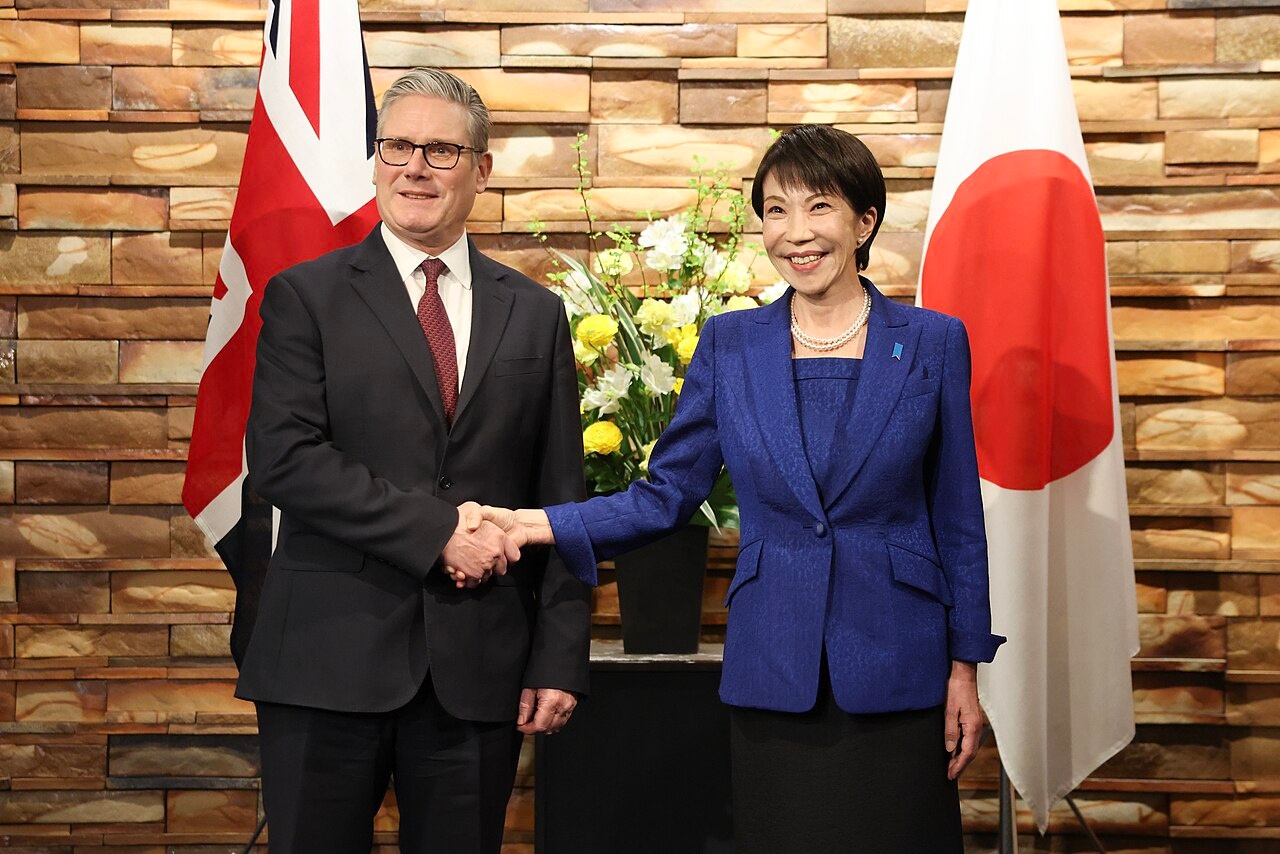
LONDON, June 14 (Parliament Politics Magazine) – Prime Minister Keir Starmer welcomed Japanese Prime Minister Sanae Takaichi to Downing Street this Sunday to cement a new era of cooperation between the two nations.
The meetings, held ahead of the upcoming G7 summit, resulted in more than 10 bilateral agreements designed to bolster economic security, technological innovation, and defense capabilities.
The visit marks a significant moment for the bilateral relationship as both leaders look to align their interests in a volatile global climate. Officials described the depth of the partnership as so substantial that it could be classified as a relationship between quasi-allies.
Green Infrastructure Expansion
A central component of the discussions involves an £18 billion investment framework aimed at infrastructure and clean energy. According to government details, this injection includes £9 billion dedicated to offshore wind projects, which will support 5.9 gigawatts of capacity across Scotland and the Celtic Sea.
An additional £9 billion is earmarked for inward investment from Japanese firms into UK financial services and infrastructure. Furthermore, Rolls-Royce has signed a new agreement to deepen its collaboration with the Japan Atomic Energy Agency, focusing on the development of next-generation nuclear technology.
Launch Of Technological Partnership
The nations also launched the UK-Japan Frontier Technology Partnership to secure supply chains against geopolitical friction. This agreement creates a formal pipeline between the UK Semiconductor Centre and Rapidus, Japan’s £11.6 billion state-backed 2nm microchip facility. By connecting British design expertise with Japanese manufacturing, the partnership aims to create a direct pathway for the UK to produce cutting-edge chips.
Technology Minister Kanishka Narayan noted the strategic importance of the deal during his recent remarks.
“This deal will offer our talented innovators driving the future of quantum computers, next-generation chips, and clean energy direct access to vital investment, manufacturing and markets,” Narayan said.
The partnership also covers collaborative research in artificial intelligence and quantum computing. It is intended to bridge British software capabilities with Japan’s extensive experience in advanced manufacturing, fostering growth and job creation across both economies.
Joint Security Initiatives
The leaders reaffirmed their commitment to the Global Combat Air Programme, an initiative to develop a sixth-generation fighter jet by 2035 alongside Italy. This defense project remains at the heart of the relationship, as both countries recognize the growing necessity of shared strategic security.
Beyond joint aviation projects, the nations signed a declaration on economic security. This agreement commits both governments to building resilient mineral reserves and protecting against arbitrary export controls.
The security discussions come at a challenging time for the British government. The Prime Minister is navigating domestic political pressure following the resignation of Defense Secretary John Healey and other officials due to debates over military funding. While the government moves to finalize these international pacts, observers note that Japanese leadership remains focused on ensuring the UK maintains its commitment to shared long-term defense spending.
The summit also highlighted broader geopolitical interests. With Canada moving to join the Global Combat Air Programme as an observer and potential shifts in European defense collaborations, the UK-Japan alliance is positioned as a primary anchor for Indo-Pacific and Euro-Atlantic security. The leaders concluded the talks by emphasizing their shared determination to contribute to international stability and peace.