
KYIV, June 25 (Parliament Politics Magazine) – The Ukrainian defense technology company Fire Point is accelerating its production timeline with the objective of manufacturing its first ballistic missile interceptors by the end of 2026. This development marks a significant advancement for the firm, which has secured crucial partnerships and increased political support from European allies to bolster regional air defense capabilities.
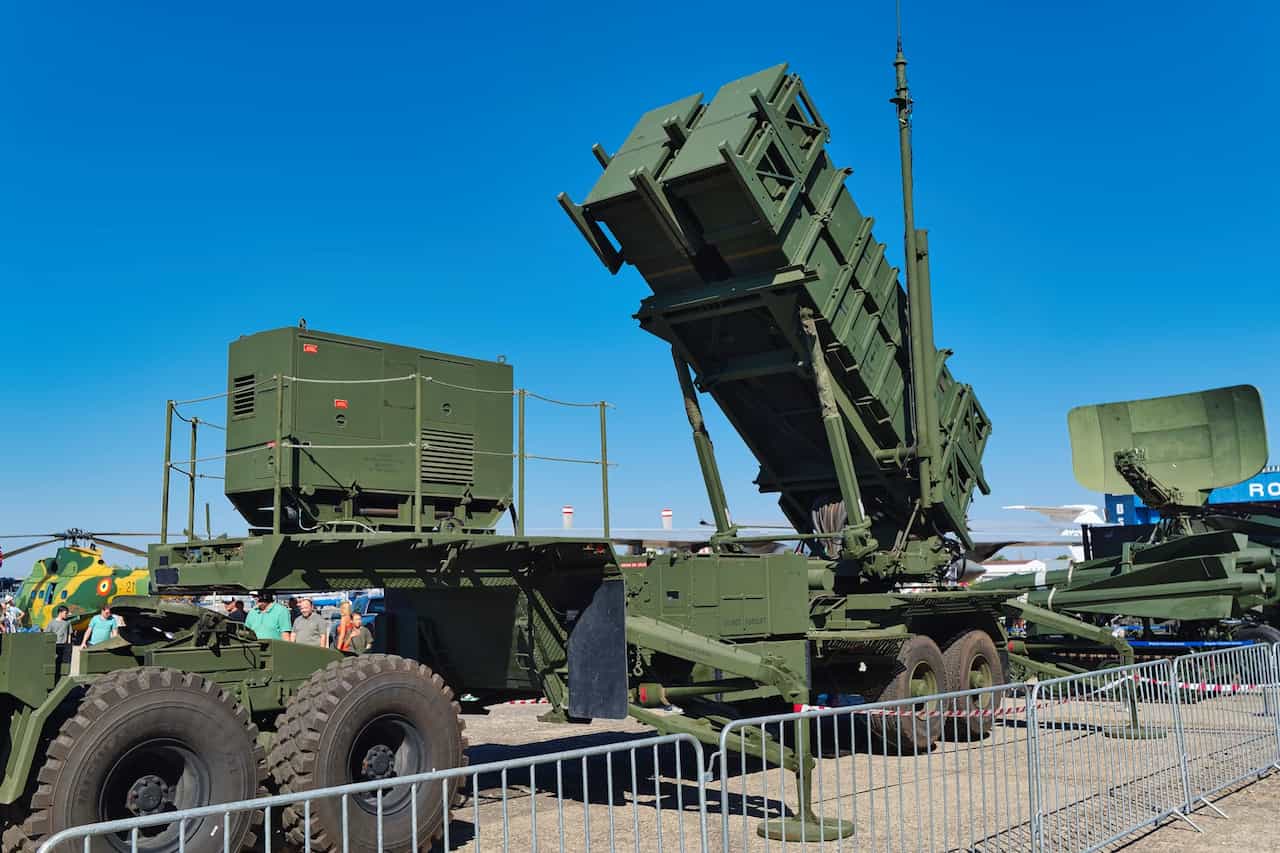
The effort, known as Project Freyja, serves as a collaborative framework intended to establish a unified European missile defense network. This initiative is designed to offer a more economical, domestically produced alternative to existing high-end Western defense systems, such as the U.S.-manufactured Patriot.
Building a Unified European Network
The foundation of this defensive system is the FP-7X rocket, a specialized, highly maneuverable variant of Fire Point’s existing FP-7 short-range ballistic missile. To ensure the system functions effectively, the company has entered into a memorandum of understanding with the German defense manufacturer Hensoldt. Under this agreement, Hensoldt will provide its TRML-4D high-performance radar, which is intended to serve as the primary sensor for the interceptor platform.
Beyond radar hardware, the company is actively negotiating with several European defense firms to integrate advanced components, including imaging infrared homing devices and radio frequency seekers. These technologies are essential for tracking targets via electromagnetic signals, a critical requirement for modern ballistic missile defense.
Managing Costs and Production
One of the primary goals of Project Freyja is to drastically reduce the financial burden of air defense operations. The current design target aims to lower the cost of a single ballistic missile intercept to less than $1 million. This estimate includes approximately $500,000 for the rocket itself and an additional $250,000 for the seeker unit. Such a price point represents a substantial reduction in expenditure when compared to the roughly $3.8 million required for a single Patriot interceptor round.
The shift in the project’s schedule reflects broader changes in the defense landscape. Denys Shtilierman, co-founder and chief designer at Fire Point, noted that the initiative was originally slated for completion in late 2027. However, the involvement of the Ukrainian government and supportive European partners, particularly Germany, has significantly compressed the development timeline.
“Something changed: our government and a lot of other European governments, for example the German government, connected to the initiative,” Shtilierman said. “If, for example, every European government starts moving swiftly, we can do interceptors by the end of this year.”

Navigating Regulatory Hurdles
Fire Point has leveraged Ukraine’s current wartime regulatory environment to bypass several bureaucratic obstacles that typically slow down defense production in Europe. While standard testing approvals can require between six months and a year within the European Union, the current framework in Ukraine allows the company to obtain similar permissions in as little as one day. This flexibility has allowed the team to maintain a faster pace than many of its international counterparts.
The company is preparing to initiate serial production of the interceptor airframes as early as August 2026. These components will be held in storage until the specialized European guidance technologies are ready for final integration.
Expansion of Defensive Capabilities
While Fire Point remains focused on air defense, the company is concurrently advancing its offensive capabilities. Preparations are underway for flight tests of the FP-9 tactical ballistic missile this summer. This weapon, which is designed to carry an 800-kg warhead over a range of up to 850 km, is expected to undergo battlefield evaluations by the autumn.
In addition to these missile projects, the firm has developed a stealthy, low-altitude uncrewed vessel known as the Varan. This system features a unique pop-up pneumatic launcher, allowing it to engage enemy ships at close range by firing thermobaric rockets into a vessel’s bridge or command center before detonating its main explosive payload against the hull.
As the company looks toward the future, its financial profile has also shifted. Discussions regarding a potential $760-million investment for a 30% stake in the firm have concluded, as the company’s valuation has surpassed that offer. Recent interest from a prominent investment bank has valued Fire Point at approximately $5.8 billion, reflecting the growing market interest in the firm’s rapid development of missile defense technologies.