

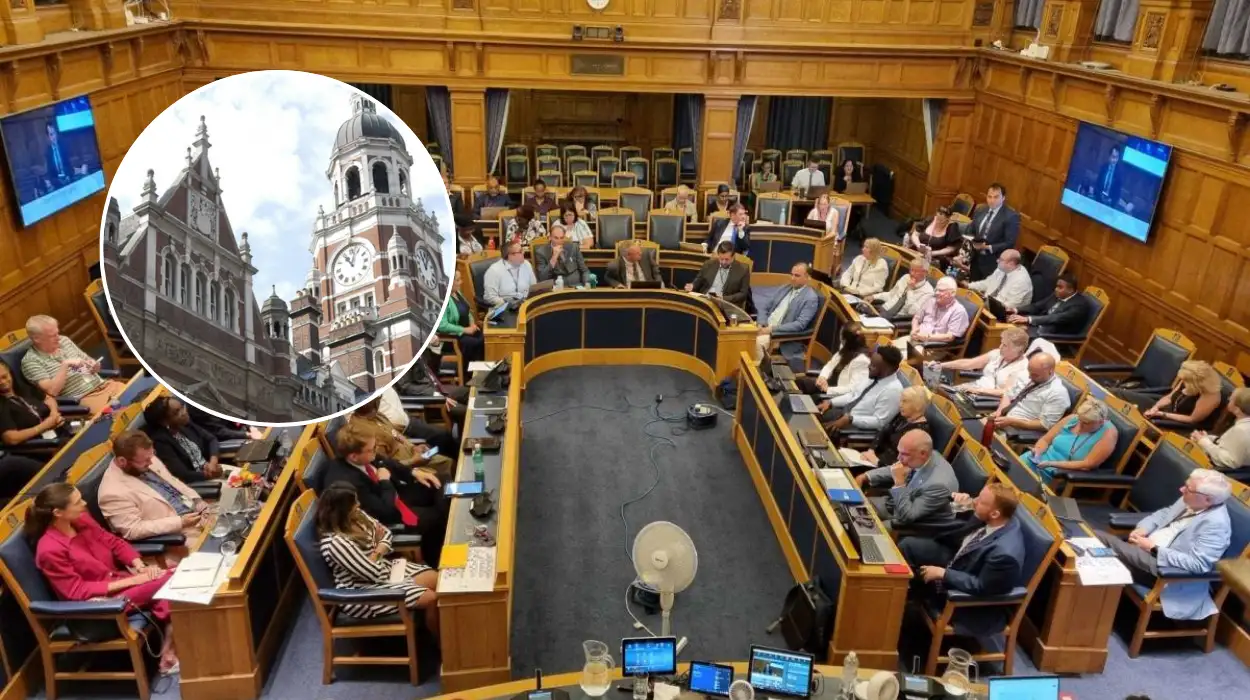
Croydon (Parliament Politics Magazine) – Croydon Council is projecting a £22m underspend this financial year, signalling stronger fiscal discipline and improved management of the borough’s resources.
Croydon is gradually lowering its reliance on emergency government bailouts, a program known as Exceptional Financial Support (EFS), according to data presented at the council’s Scrutiny and Overview committee on Tuesday night.
The borough’s EFS for 2025–2026 was £136 million, second only to Birmingham. Through strict cost-cutting measures, the council was able to lower it to £113 million, which it thinks will alleviate the borough’s financial difficulties.
“It’s still a very stark picture,”
said Councillor Jason Cummings, Cabinet Member for Finance,
“but there has been a significant amount of progress and improvement in the overall financial position.”
According to the council’s report, underspending is planned in all areas, including housing, adult social care, and health.
As part of Croydon’s stabilization plan, which aims to assist the borough in reducing its debt of approximately £1.4 billion, each of these departments was instructed to reduce expenses.
Croydon, which has filed for bankruptcy three times in the past five years, is facing financial difficulties as a result of these actions.
Its most noteworthy expenditure was a £200 million loan to Brick by Brick, a failing real estate developer in Croydon, of which £68 million was written off and lost forever.
In July 2025, four commissioners were appointed on McMahon’s recommendation to externally monitor the borough’s failing finances. They bear some of the blame for Croydon’s tightening of its 2025 budget and the stabilization plan that was discussed at Tuesday’s meeting.
Jason Perry, the mayor of Croydon, has previously attributed the borough’s “historic toxic mismanagement” to the former Labour government. Throughout his term in office, Perry has increased council tax several times in an effort to improve the situation; as a result, it is currently 27% higher than it was prior to his election.
Although Perry’s main goal is to reduce Croydon’s expenses, he and Labour shadow mayor Rowenna Davis recently urged the central government to provide the borough with additional funds in the impending Fair funds Review 2.0.
Perry said in a statement:
“For over a decade, Croydon has been held back by an outdated formula that fails to reflect our population growth, social challenges, and the rising cost of delivering essential services.”
In the meeting, Cummings expressed concern about the Fair Funding Review, as well as The Budget announcement on November 26, saying:
“Part of the problem is that there’s nobody out there saying ‘we’ve got too much money, don’t give us more’, so we’re all fighting over a pie that won’t feed everybody.”
How will the underspend affect service budgets next year?
The underspend will allow the council to carry forward reserves, which can give a buffer against fiscal pitfalls or fund one- off investments in services or structure. Still, underspending can also lead to tighter budget allocations in posterior times, as budgets are frequently set grounded on former spending patterns. However, unborn budgets may be reduced, If underspending is seen as reflective of lower demand or effectiveness.
Croydon plans to maintain tight financial control coming time, which means service budgets will be precisely managed to avoid overspending while icing essential services are delivered.
The council aims to balance fiscal stability with meeting residents’ requirements, so underspending will be covered nearly to insure it does n’t negatively affect service quality or delivery.