
The partitioning of Ireland in 1921 represents one of the most significant historical turning points in both modern Irish and British history, creating two distinct political communities in tomorrow’s Northern Ireland (within the UK) and Southern Ireland (later the Irish Free State and ultimately the Republic of Ireland).
This historic event raised a fundamental question that continues to provoke debate today: Were Protestants for or against the partition of Ireland? This article explores the factors that shaped Protestant views on partition, their divisions, and the long-lasting effects on Irish society.
Historical context of the partition
Political tensions have existed within Ireland, particularly between those seeking independence and those remaining loyal to Great Britain. The rising wave of Irish nationalism in the 19th and 20th centuries, specifically through the campaign for Home Rule, intensified the divisions within Irish society.
Protestants in the northern province of Ulster held the fear that an independent Ireland would consist of a political Catholic majority threatening their political, religious, and economic position. There were some Protestants, especially those outside of Ulster, that wanted independence.
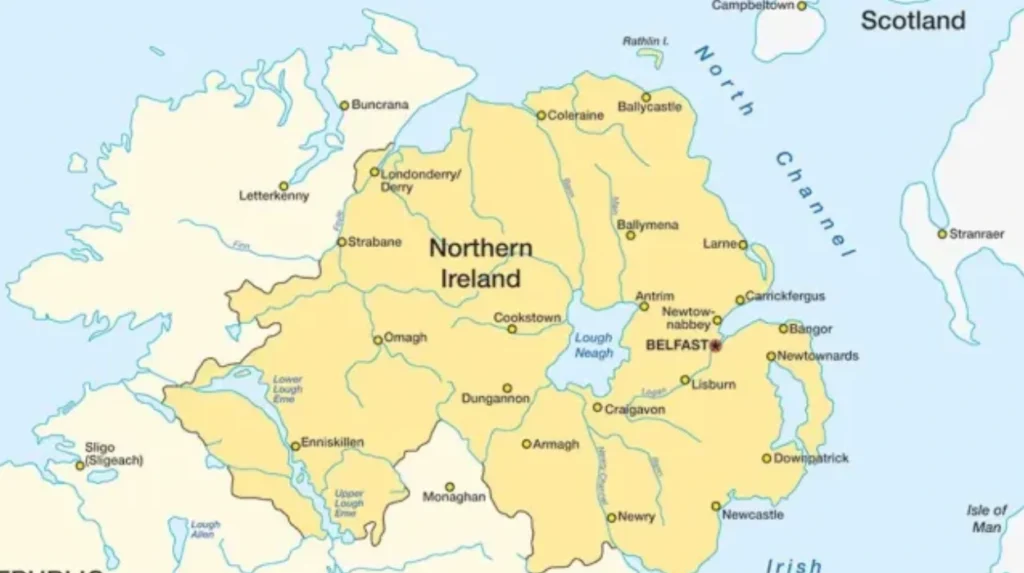
The Anglo-Irish Treaty of 1921 formalized this partition. Northern Ireland was composed of six counties of Ulster on the British government side of partition, while the remaining twenty-six counties became the Irish Free State. This partitioning reflected the underlying religious divide between largely Protestant Northern Ireland and the majority Catholic south.
Protestant Support for Partition
Ulster Unionism and Fear of Catholic Dominance
Many Protestants in Ulster were strong supporters of partition. The term ‘Unionist’ described their views. They wanted Ireland to remain part of the rule of Britain and wanted to maintain political power since they feared that Catholic nationalism would dominate in a unified Ireland.
Protestants had enjoyed social, economic, and political advantages for centuries under British rule. What partition gave them was the opportunity to retain those advantages and have a formal political setup where they were in the majority.
Defending a British Identity
For those living in Belfast or other parts of Northern Ireland, identity was tied to being British. Protestants in Northern Ireland saw themselves as British citizens and not as Irish nationalists. The idea of partition protected the very notion of these Protestants being British and within a British country, rather than being absorbed within a state whose political culture was dominated by Catholics.
Organised Resistance to Home Rule
The Protestant populace emerged in unified resistance through the Irish independence movement. A formal aspect of this was demonstrated with the Ulster Covenant of 1912, in which hundreds of thousands of Protestants pledged that they would not support Home Rule and would defend their ties to Britain. It can be argued that this was an important precursor to a supportive stance towards the partitioning of Ireland.
Protestant Opposition to Partition
Other Protestants were not supportive of partition. Many Protestants in southern Ireland were openly nationalist. In the South, the story was different for the Protestants. A lot of them had adapted to a life within the new Irish Free State and had supported it. In general, they were a minority.
But despite that, they managed to live alongside their Catholic neighbors. Some felt disconnected from the fight of the Ulster Unionists, who carved out a separate state that dictated their isolation.
The Role of Religion and Identity
Religion was a crucial factor that shaped the attitudes of the Protestant communities. They feared that a Catholic-majority Ireland would place that faith in a position of too much power politically. Partition had afforded them the religious freedom they required under a British system where they had more faith. Protestant identity was about more than faith; it was a cultural journey.
There were Loyalist customs such as the Orange Order parades, which celebrated British heritage. Partition had given these customs a formal place and protection in Northern Ireland for good or bad.
Those of the nationalist Protestant identity usually aligned with an Irish cultural identity. They were reluctant to tie themselves solely to British identity.
Political Leaders and Protestant Perspectives
One of the most influential Protestant leaders was Edward Carson. Carson led the Ulster Unionist movement and played a significant role in the campaign against Home Rule. Protestants in the north gained strength and agency under Carson’s leadership.
As with the case of Erskine Childers, a Protestant who was recognized as a supporter of Irish independence, it is clear that there were many other Protestants who did not share Carson’s sentiments. They demonstrate how divided Protestant opinion was.
Consequences of Protestant Support and Opposition
Three Consequences of Protestant Support and Opposition are:
- A Divided Ireland: The divergence of views among Protestants reorganized the political map of Ireland. Protestants monopolized political power in the North and in the South. Protestants became a minority in a state governed by the Catholic majority.
- Long-Term Frictions: Partition did not resolve conflict but introduced new conflicts. Northern Ireland’s Protestant-Catholic cleavage expanded sporadically and insularly into a major political, societal, and cultural conflict, exemplified in The Troubles in the late 20th century.
- Survival and Adaptation: Protestant communities in both North and South were forced to adapt to their environments. Protestant political supremacy in the North was replaced by existential minority positioning in the South, where Protestant minority cultures survive and preserve their religious identity and expressions.
Were Protestants for or against the partition of Ireland?
The simple answer to the question, Were Protestants for or against the partition of Ireland?, is complicated.
- In Northern Ireland, most Protestants were pro-partition because it protected their British identity, their political majority, and their economic security.
- In Southern Ireland, there were certainly Protestants who were opposed to partition as members of the Irish nationalist movement who would have preferred to stay together rather than divide.
- There were many Protestants who were conflicted between concern about their faith, their cultural identity, and political reality.
Partition was not only a political settlement. It was also a record of the religious, cultural, and identity struggles that defined Ireland. When considering the Protestant perspective of partition, we are reminded that history is rarely black and white and consists of many voices, divisions, and experiences, all of which resonate in Ireland today.
