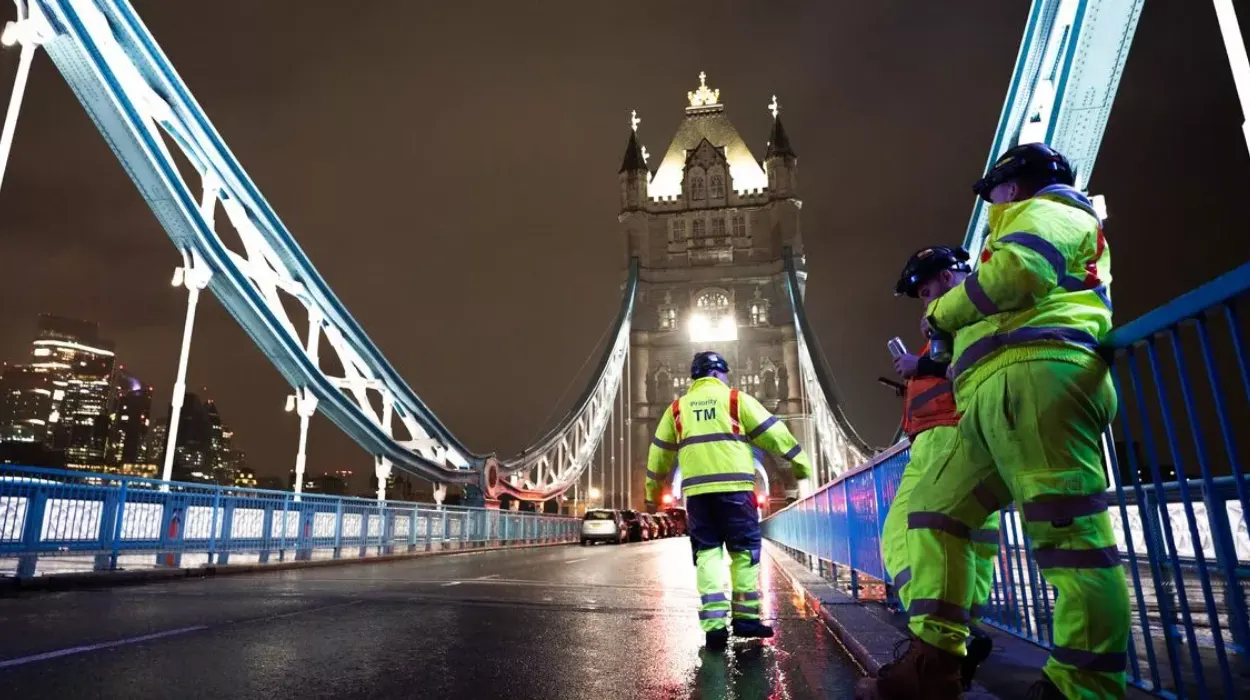
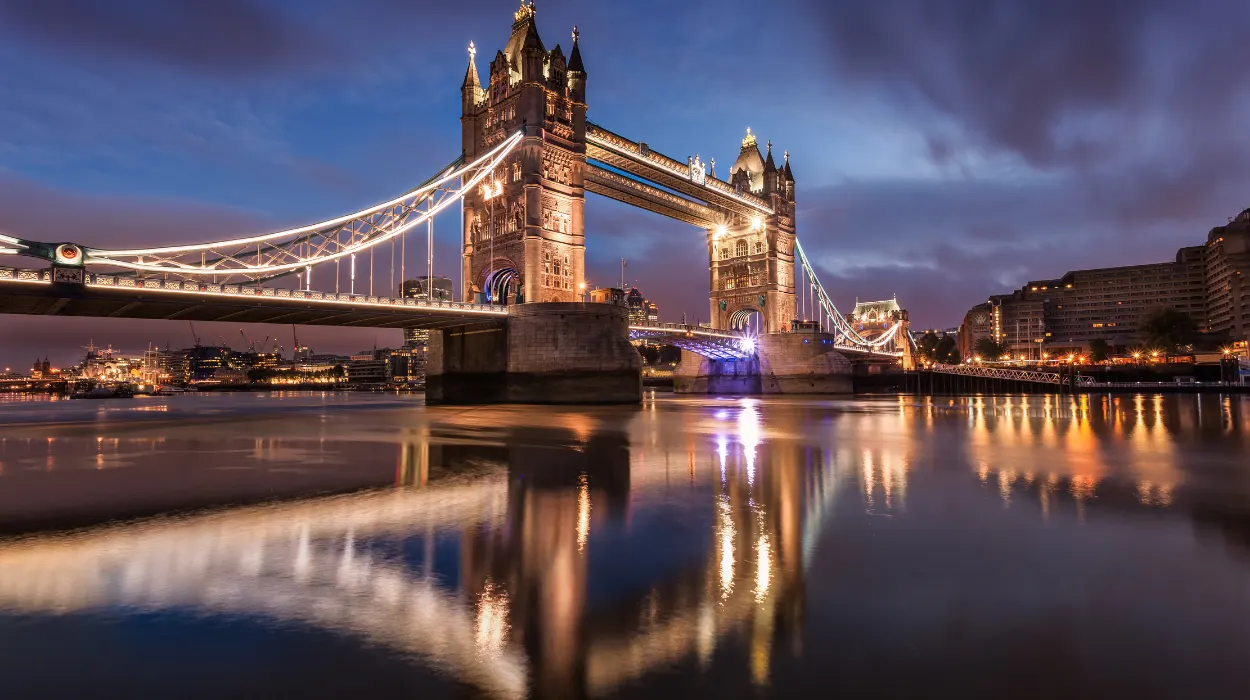
Tower Bridge is one of London’s most iconic landmarks and an engineering marvel of its time. Often mistaken for London Bridge, Tower Bridge’s distinctive design and historical significance make it a symbol of the city’s rich heritage. This article offers a timeless exploration of when Tower Bridge was built, its history, design, construction details, and its enduring role in London’s urban landscape.
Spanning the River Thames close to the historic Tower of London, Tower Bridge is a masterpiece of Victorian engineering and architecture. Its construction responded to burgeoning commercial and population growth in East London in the 19th century, requiring a new crossing to ease congestion while allowing continued river traffic.
The bridge’s famed bascule (drawbridge) design, coupled with its majestic twin towers and walkways, distinguish it as a functional yet grand monument. Understanding its history not only reveals London’s urban development but also showcases engineering innovation.
The Genesis: Why Tower Bridge Was Needed
By the latter half of the 19th century, London had grown immensely, with the East End population increasing dramatically. About 39 percent of London’s population lived east of the original London Bridge, which had become congested and inadequate for traffic and commercial movement across the Thames.
Ships accessing the Pool of London — the commercial dock area adjacent to the Tower of London — required a bridge design that would not obstruct their passage. Thus, a fixed low-level bridge was not feasible, leading to the idea of a mechanical bridge that could open for river traffic while serving pedestrians and vehicles alike.
Early Planning and Design Competition
In 1876, a Special Bridge Committee was established to find a suitable solution for a new river crossing downstream of London Bridge. Over fifty designs were submitted during a public competition, including proposals by renowned civil engineer Sir Joseph Bazalgette. However, none of the designs were accepted, primarily due to insufficient headroom for the tall ships navigating the Thames.
After careful consideration, the committee recommended constructing a low-level mechanical bridge. This recommendation led to the evaluation of three design models: Design A, which was a swing bridge; Design B, a variation of the swing bridge; and Design C, a bascule or drawbridge design.
Ultimately, Design C was chosen as the preferred option, as it combined a bascule mechanism that allowed the roadway to open for river traffic with suspension bridge elements to provide the necessary structural support. This innovative design balanced both the needs of road traffic and maritime navigation, laying the foundation for what would become the iconic Tower Bridge.
Legislative Approval and Construction Start
Parliament authorized the construction of Tower Bridge through the Corporation of London (Tower Bridge) Act 1885, which outlined detailed specifications for the project. The act required the central opening span of the bridge to have a clear width of 200 feet and a variable clearance height, allowing tall ships to pass through the River Thames.
It specified that the large piers supporting the bridge should measure 185 feet in length and 70 feet in width to ensure the structure’s stability. Additionally, the bridge’s architectural design was mandated to harmonize with the nearby Tower of London, preserving the historic aesthetic of the area.
Initially, the act stipulated that the bridge should be completed within four years, although construction delays led to extensions. Construction officially began on April 22, 1886, marking the start of an ambitious engineering project that would become one of London’s most famous landmarks.
Engineering and Architectural Team
The bridge’s design was a collaboration between:
- Sir Horace Jones: The City Architect, who originally proposed the design but died in 1887 before completion.
- Sir John Wolfe Barry: The civil engineer responsible for designing the bridge’s innovative bascule system.
- Henry Marc Brunel: Assisted Barry as an engineer.
Their work blended architectural aesthetics with advanced engineering ensuring functionality and durability.
Construction Details
Construction of Tower Bridge took eight years, completing in 1894. The project involved sinking two massive piers into the riverbed of the Thames, each containing over 70,000 long tons of concrete to ensure a stable foundation. Approximately 11,000 tons of steel were used to create the framework for the towers and elevated walkways.
This steel skeleton was then clad with Cornish granite and Portland stone, providing both protection against the elements and an architectural style that harmonized with the nearby Tower of London.
The bridge’s bascules—the two movable roadway sections—were originally powered by hydraulic mechanisms driven by steam engines, allowing them to open within five minutes to let river traffic pass. Throughout the construction, an average of more than 400 workers labored daily, supervised by resident engineer Edward Cruttwell, who ensured the project’s smooth progress and safety.
Completion and Opening Ceremony
Tower Bridge opened to the public on June 30, 1894, in a grand ceremony attended by Edward, Prince of Wales, and Alexandra, Princess of Wales. The opening was celebrated as a historic occasion for the City of London and was marked by festivities including entertainment for the thousands of laborers.
The bridge immediately became a critical transport link, easing congestion and enabling river traffic to continue unobstructed.
Design Features and Specifications
The Tower Bridge spans a total length of 940 feet (290 meters), including its approaches. Its most striking features are the two main towers, each standing 213 feet (65 meters) tall, which are connected high above the river by two horizontal walkways.
The central span of the bridge consists of two bascules, or leaves, that can be raised to open the river passage, allowing the passage of ships. Originally, the bascules were powered by hydraulic steam engines, but in 1972 the operating mechanism was upgraded to an electro-hydraulic system.
Today, the bridge supports both vehicle and pedestrian traffic, serving as a critical crossing on London’s Inner Ring Road and remaining an iconic feature of the cityscape.
Tower Bridge Today
Tower Bridge continues to be a vital part of London’s transport infrastructure, seeing around 40,000 crossings daily. In addition to its transportation role, it serves as a major tourist attraction. Its twin towers, high-level walkways, and Victorian engine rooms are home to the Tower Bridge Exhibition, attracting hundreds of thousands of visitors yearly.
The upper walkways, once closed due to low usage and safety concerns, were reopened as part of the exhibition and feature glass floors offering spectacular views of the Thames below.
Tower Bridge’s Construction and Significance
Construction of Tower Bridge spanned eight years, from 1886 to 1894, and was funded by the City Bridge Foundation, a charitable trust responsible for maintaining London’s bridges. The project was designed by architect Horace Jones and engineered by John Wolfe Barry and Henry Marc Brunel.
Tower Bridge uniquely combines bascule and suspension bridge engineering, featuring a Gothic architectural style to complement the nearby Tower of London. The bridge was officially opened by the Prince and Princess of Wales on June 30, 1894, in a grand ceremony. Since then, Tower Bridge has remained a key London landmark and a vital functional river crossing over the Thames.