Bentonville, Arkansas, February 3, 2026: Parliament News notes, that The global retail landscape entered a new era this year as the Walmart trillion valuation milestone was reached, marking one of the most significant moments in modern US corporate history. The achievement places Walmart among a select group of companies whose market capitalization has crossed the symbolic $1 trillion threshold, underscoring the scale and durability of its business model in a rapidly evolving economy.
The development reflects a convergence of strong consumer demand, disciplined execution, and a strategic shift that has gradually repositioned the company beyond its traditional identity as a brick-and-mortar retailer.
Market Reaction Highlights Investor Confidence
Financial markets responded decisively as confirmation of the Walmart trillion valuation spread across Wall Street. Shares gained momentum amid rising institutional demand, with analysts citing predictable cash flows and defensive characteristics as key attractions.
Unlike speculative rallies driven by hype, the valuation expansion was anchored in earnings performance, signaling sustained confidence rather than short-term enthusiasm.
Earnings Performance Drives Valuation Expansion
Quarterly results released throughout the year showed steady revenue growth across grocery, general merchandise, and digital services. Cost controls and supply-chain efficiency helped preserve margins even as inflation continued to affect global logistics.
These fundamentals provided the financial backbone for the Walmart trillion valuation, reinforcing the perception of the company as both a growth and stability asset in diversified portfolios.
Digital Transformation Reshapes Retail Economics
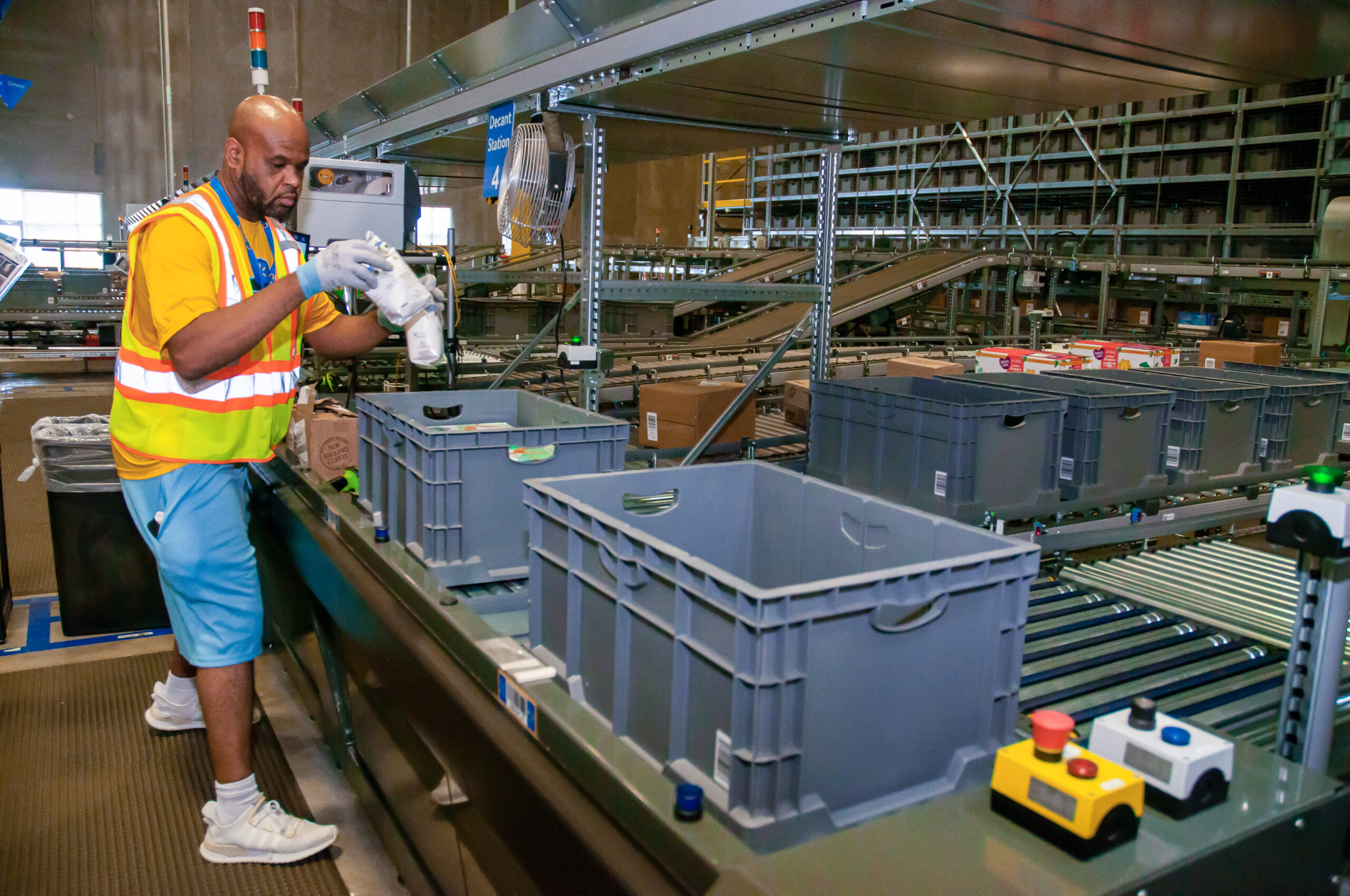
Over the past decade, the company has invested heavily in automation, fulfillment infrastructure, and data analytics. These efforts allowed it to integrate online and in-store operations at a scale unmatched by competitors.
The shift toward omnichannel retailing played a critical role in supporting the Walmart trillion valuation, as investors increasingly valued logistics capability and technology integration alongside traditional retail metrics.
Advertising and Data Monetization Add New Growth Layer
Retail media emerged as one of the fastest-growing revenue streams, offering higher margins than conventional retail operations. Brands increasingly turned to Walmart’s platforms to reach consumers directly at the point of purchase.
This diversification strengthened the business case behind the Walmart trillion valuation, demonstrating that the company’s data assets could generate recurring income independent of physical store traffic.
Global Footprint Strengthens Revenue Stability
International operations continued to contribute to earnings resilience. While performance varied by region, the global footprint provided geographic diversification that insulated results from localized slowdowns.
Such breadth added credibility to the Walmart trillion valuation, reinforcing the company’s position as a global commercial anchor rather than a purely domestic retailer.
Consumer Behavior Favors Value and Scale
Economic uncertainty pushed consumers toward value-focused retailers, benefiting Walmart’s core pricing strategy. Grocery sales, essential goods, and private-label products remained strong throughout the year.
This trend supported revenue stability and underpinned the sustainability of the Walmart trillion valuation during a period when many discretionary retailers struggled.
Supply Chain Resilience Proves Decisive
Supply-chain disruptions that affected global commerce in recent years had a muted impact on Walmart due to its scale and supplier relationships. Inventory availability remained consistent compared with peers.
That operational reliability reinforced investor trust and played a meaningful role in sustaining the Walmart trillion valuation.
Financial Strength and Cash Flow Discipline
Strong operating cash flow enabled continued reinvestment without overreliance on debt markets. Capital spending focused on automation, logistics, and technology rather than aggressive expansion.
This discipline enhanced confidence that the Walmart trillion valuation was supported by balance-sheet strength rather than leverage-driven growth.
Competitive Implications for the Retail Sector
The valuation milestone has redefined benchmarks across the retail industry. Competitors now face increased pressure to modernize operations, scale digital capabilities, and diversify revenue sources.
The arrival of the Walmart trillion valuation signals that retail can command premium market multiples when operational excellence meets technological execution.
One Market Voice on the Milestone
One senior equity strategist said,
“This valuation confirms that scale, execution, and adaptability still matter in retail, even in a technology-dominated market.”
Regulatory and Policy Environment
As market influence grows, regulatory scrutiny remains a factor, particularly around labor practices, pricing power, and competition policy. However, investors have largely priced these risks into long-term forecasts.
The regulatory landscape has not diminished confidence in the Walmart trillion valuation, which is seen as resilient under existing compliance frameworks.
Technology Investment and Automation Strategy
Artificial intelligence, robotics, and predictive analytics are now embedded across logistics and inventory systems. These technologies reduce waste, improve forecasting, and optimize labor allocation.
Such efficiencies strengthened margins and reinforced the economic logic behind the Walmart trillion valuation.
Capital Markets Perspective
Institutional investors increasingly categorize Walmart alongside infrastructure-like assets due to its scale and predictability. Pension funds and long-term allocators have expanded exposure accordingly.
This positioning has helped stabilize trading patterns following the Walmart trillion valuation milestone.
Labor, Wages, and Workforce Strategy
Walmart’s workforce strategy evolved alongside automation, with investments in training and wage adjustments designed to retain labor while improving productivity.
The balance between technology and human capital has been closely watched by analysts evaluating the durability of the Walmart trillion valuation.
Digital Payments and Financial Services Expansion
The company’s expansion into financial tools and payment services deepened customer engagement and generated incremental revenue opportunities.
These ecosystem developments contributed indirectly to sustaining the Walmart trillion valuation by extending the brand’s role beyond retail.
International Investor Interest Grows
Global investors increased allocations as the milestone elevated Walmart’s profile among sovereign funds and cross-border portfolios.
This influx of capital supported liquidity and helped anchor the Walmart trillion valuation during broader market volatility.
Measuring Sustainability Beyond the Milestone
Analysts now focus on forward indicators such as advertising growth, fulfillment efficiency, and return on invested capital.
Long-term sustainability of the Walmart trillion valuation will depend on continued execution rather than symbolic status alone.
History of Walmart’s Market Evolution
Walmart began as a regional discount retailer in the mid-20th century, expanding steadily through aggressive pricing and logistics efficiency. Over decades, it built scale unmatched in global retail.
The path to the Walmart trillion valuation was shaped by gradual reinvention rather than sudden disruption, reflecting a rare ability to evolve while maintaining core strengths.
Strategic Outlook Beyond 2026
Management guidance emphasizes continued focus on efficiency, technology integration, and disciplined capital allocation.
The market will judge future performance not by the milestone itself, but by whether the Walmart trillion valuation can be maintained across economic cycles.
The achievement of a trillion-dollar market capitalization marks a defining moment in modern retail history. It reflects structural transformation, not speculation.
As the retail sector continues to evolve, the Walmart trillion valuation stands as evidence that scale, innovation, and operational discipline can coexist — and thrive — in the global economy.