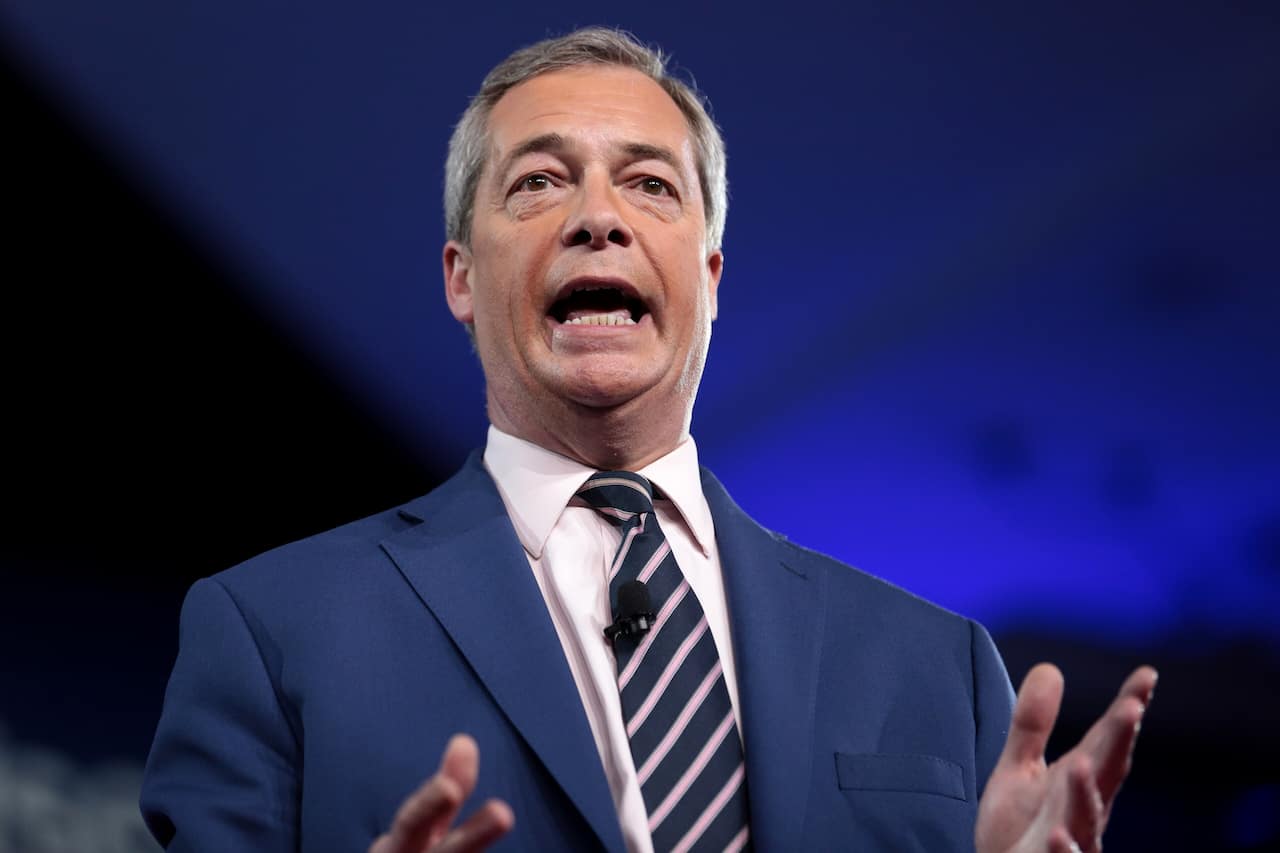
LONDON, June 27 (Parliament Politics Magazine) – Reform UK leader Nigel Farage recently declared that unselective mass migration has altered British cities literally beyond recognition. Speaking at the Alliance for Responsible Citizenship conference, he articulated a vision for the country that prioritizes border security and national identity. Farage emphasized that the current political system remains broken following the resignation of Prime Minister Keir Starmer. He urged for a new general election, expressing confidence in the electoral prospects of his own party.
Farage framed the ongoing political instability as an extension of the Brexit movement that transformed the national landscape a decade ago. He noted that the two traditional parties have struggled to adapt to the changing priorities of voters who demanded greater sovereignty. Recent local election results, where Reform UK secured over 600 seats, illustrate a significant shift in political momentum. Farage suggested that the core concerns of these voters, particularly regarding immigration and border control, continue to drive the current unrest.
The Reform UK leader utilized the conference as a platform to warn against specific policy paths, suggesting that the United Kingdom serves as a cautionary tale for the United States. He pointed to what he described as failures in diversity policies and the implementation of what he calls a two-tier justice system. Farage argued that a lack of selectivity regarding new arrivals has fundamentally impacted the social fabric of metropolitan areas.
He asserted that the focus on Diversity, Equity, and Inclusion initiatives has moved too far, ultimately harming the consistency of policing and legal outcomes. His proposed platform for Reform UK centers on restricting migration to high-skilled workers and enforcing stricter deportation protocols for those entering the country illegally. Farage maintained that leadership has struggled to defend traditional Judeo-Christian and national values, leading to a broader crisis of identity.
“Mass migration has changed this country, certainly in many of our cities, literally beyond recognition,” he said.
Regarding international affairs, Farage expressed a desire to move the United Kingdom closer to the United States, particularly concerning trade and financial services. He pointed to his long-standing professional history with American firms as evidence of the deep ties between the two nations. Farage insisted that both countries are bound by shared culture and investment, which should be leveraged to break down existing trade barriers.
The leader also dismissed speculation regarding a return to the European Union. He argued that the costs associated with membership, including the requirement to adopt a different currency and pay substantial fees, remain unappealing to the public. He characterized such interests as being confined to a small group within the Westminster political establishment rather than representing the wider electorate.
Farage suggested that his party is uniquely positioned to address the disconnect between the political class and the public. By focusing on border security and a renewed commitment to national sovereignty, he believes Reform UK offers a viable alternative to the status quo. The push for a new general election remains the party’s central demand as they seek to implement a new mandate for the country.