
Middle East, January 2026 — According to parliament news., the Middle East has entered one of its most consequential periods in recent history, with global security risks rising sharply as regional tensions intersect with international power dynamics. Developments involving Israel, the United States, and Iran are increasingly viewed through a global lens, as policymakers, defense officials, and financial institutions assess the broader implications of instability in a region that has long shaped world affairs.
What distinguishes 2026 from earlier periods of unrest is not only the intensity of regional friction, but the degree to which it now influences global diplomatic agendas, economic planning, and security doctrines across continents.
Historical Patterns That Shaped the Present Moment
The Middle East has been central to international security calculations for decades. Its strategic geography, energy resources, and political complexity have repeatedly drawn global powers into regional disputes. Over time, unresolved conflicts, shifting alliances, and repeated cycles of confrontation created an environment where crisis management became routine rather than exceptional.
Throughout the late twentieth and early twenty-first centuries, indirect engagement and proxy dynamics allowed rival actors to pursue influence while avoiding direct confrontation. These arrangements, however, gradually accumulated risk. As regional militaries modernized and external involvement deepened, the foundation was laid for today’s heightened global security risks.
Why 2026 Represents a Defining Threshold
The year 2026 marks a convergence of political, military, and technological factors that collectively reduce tolerance for ambiguity. Decision-making timelines have compressed, while transparency driven by media and digital surveillance has limited the effectiveness of quiet diplomacy.
Public signaling has replaced strategic silence in many cases, narrowing the space for de-escalation. As a result, global security risks have increased not simply because of intent, but because the margin for error has diminished significantly.
Military Readiness and the Visibility Factor
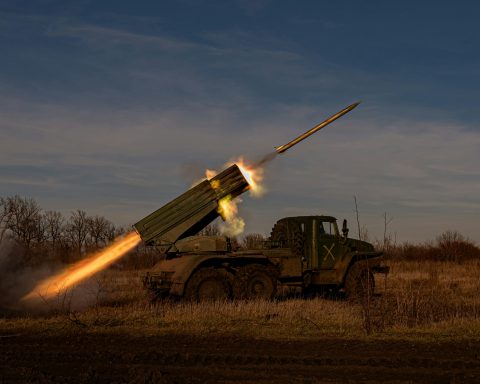
Military preparedness across the Middle East has become increasingly visible. Training exercises, force repositioning, and strategic alerts are communicated openly, both to deter adversaries and to reassure domestic audiences. While these measures are framed as defensive, their cumulative effect can heighten global security risks by increasing the probability of unintended encounters.
The concentration of advanced military systems in confined geographic areas complicates coordination and increases the stakes of misinterpretation.

Deterrence Versus Escalation
Deterrence remains a central concept in regional strategy, yet its effectiveness depends on clarity and restraint. When signaling becomes too frequent or ambiguous, deterrence can blur into provocation. This delicate balance is particularly difficult to maintain in an environment where multiple actors operate simultaneously.
In such conditions, global security risks are amplified by the possibility that a minor incident could trigger a broader chain reaction.
Economic Sensitivity and Market Reactions
The Middle East’s role in global energy supply ensures that instability has immediate economic consequences. Financial markets respond quickly to perceived threats, adjusting prices, insurance premiums, and investment flows in real time.
In 2026, governments and central banks closely monitor these reactions, aware that sustained volatility linked to global security risks could undermine economic recovery and long-term growth, particularly in energy-importing nations.
Energy Infrastructure and Strategic Exposure
Energy infrastructure represents one of the most sensitive dimensions of the current crisis. Transit routes, production facilities, and maritime corridors function as strategic chokepoints where disruption could reverberate globally.
Even without physical damage, heightened threat perceptions can alter behavior, demonstrating how global security risks often operate through expectation as much as action.
Cyber Operations as a New Frontline
Modern confrontation increasingly extends into cyberspace. Cyber activity targeting communications networks, financial systems, and critical infrastructure has become a persistent feature of geopolitical competition.
These actions intensify global security risks by blurring distinctions between civilian and military domains, complicating response strategies and raising questions about proportionality and attribution.

Information Warfare and Narrative Control
Alongside cyber operations, information campaigns shape public perception and political decision-making. Narratives circulate rapidly, sometimes outpacing verification. Inaccurate or misleading information can inflame tensions and distort policy responses.
Managing information integrity has therefore become a critical component of mitigating global security risks in the digital age.
Diplomacy Under Increasing Pressure
Despite heightened tensions, diplomatic engagement continues through formal negotiations and informal channels. However, progress remains fragile. Public rhetoric and domestic political pressures constrain flexibility, making compromise politically costly.
As diplomatic space narrows, global security risks rise due to reduced capacity for crisis management and confidence-building.
Domestic Politics and Strategic Choices
Domestic political considerations play an increasingly influential role in shaping foreign policy. Public concern over security affects legislative priorities, defense spending, and leadership legitimacy.
This dynamic can amplify global security risks by incentivizing assertive postures that limit diplomatic maneuverability and encourage zero-sum thinking.
Alliances and Strategic Realignments
Allied nations are reassessing their strategic positions in response to the evolving crisis. Some strengthen security cooperation, while others seek distance to avoid entanglement. These decisions reflect shared concern over global security risks and uncertainty about regional trajectories.
Such realignments may reshape alliance structures well beyond the immediate crisis.
The Role of International Institutions
Multilateral institutions face renewed scrutiny as they attempt to respond effectively. Peacekeeping frameworks, sanctions regimes, and crisis coordination mechanisms are tested by diverging member interests.
When coordination falters, global security risks increase due to weakened collective response capacity and eroded credibility.

Humanitarian Consequences Often Overlooked
Beyond strategic analysis, civilian populations bear the greatest burden of instability. Economic disruption, displacement, and psychological stress accompany prolonged tension.
Addressing these humanitarian dimensions is essential to reducing long-term global security risks by preventing cycles of grievance and radicalization.
Social Stability and Economic Pressure
Social cohesion is often strained during periods of uncertainty. Rising prices, disrupted employment, and diminished public confidence can fuel unrest even in countries far from the immediate conflict zone.
These indirect effects illustrate how global security risks extend into social and economic domains.
Media Responsibility in Times of Crisis
Media coverage plays a decisive role in shaping understanding and response. Accurate reporting provides context and restraint, while sensationalism can exacerbate fear and miscalculation.
Responsible journalism therefore contributes directly to managing global security risks by informing rather than inflaming public discourse.
Technological Acceleration and Strategic Complexity
Rapid technological advancement adds layers of complexity to crisis management. Artificial intelligence, autonomous systems, and advanced surveillance alter both capability and perception.
In this environment, global security risks are shaped not only by human decision-making but by the speed at which technology enables action.
Strategic Forecasts for the Remainder of 2026
Analysts outline several possible trajectories. Managed deterrence could stabilize conditions if communication remains intact. Alternatively, miscalculation could trigger broader confrontation.
Each scenario carries distinct implications for global security risks and international stability, underscoring the importance of preparation, restraint, and dialogue.
Long-Term Implications for Global Order
The Middle East crisis of 2026 may influence international relations for years to come. Norms governing conflict, diplomacy, and intervention are being tested under pressure.
How global actors respond will shape the future architecture of security cooperation and conflict prevention.
When Stability Becomes a Global Responsibility
The events unfolding in the Middle East in 2026 represent a defining test for international restraint, diplomacy, and institutional resilience. As global security risks continue to shape decision-making, the choices made now will determine whether cooperation or confrontation defines the next chapter of global affairs.
One senior analyst summarized the moment succinctly,
“The challenge today is not the absence of power, but the discipline required to use it wisely.”