

Washington, February 11, 2026 — Parliament News — The debate surrounding Nvidia H200 sales entered a critical stage in 2026 as a senior Democrat on the US House China committee signaled openness to limited approvals under strict safeguards. The remarks highlight growing tension between national security priorities and economic competitiveness in the rapidly evolving semiconductor industry.
Lawmakers are evaluating whether structured licensing mechanisms could allow certain Nvidia H200 sales without undermining strategic safeguards. The issue has become a focal point of congressional discussions as global demand for high performance AI processors continues to accelerate.
Policy analysts say the coming months could define the trajectory of US semiconductor trade policy.
Strategic Weight of Advanced AI Chips
The Nvidia H200 processor stands among the most powerful AI accelerators available for commercial deployment. Designed for high performance data center applications, it supports advanced machine learning workloads and complex modeling systems.
The significance of Nvidia H200 sales extends beyond corporate revenue. These chips enable infrastructure supporting artificial intelligence research, cloud computing expansion, and scientific innovation.
Supporters argue that maintaining access to global markets strengthens US leadership in technology. Critics contend that exports of cutting edge processors require careful scrutiny to avoid unintended strategic consequences.
Congressional Oversight Framework and Export Controls
The US House China committee has consistently examined semiconductor exports as part of broader technology oversight. Legislators have emphasized the importance of clear compliance standards and monitoring mechanisms.
Any modification to Nvidia H200 sales policies would require coordination among Congress, the Department of Commerce, and intelligence agencies. Export controls are designed to balance innovation with risk mitigation.
A congressional staff member familiar with the discussion stated,
“Our responsibility is to ensure security while preserving the innovation ecosystem that drives American leadership.”
This measured tone reflects an awareness that overly restrictive policies could have economic ramifications.
Economic Implications for US Industry
The semiconductor sector represents one of the most dynamic segments of the US economy. Revenue generated through international transactions funds research, supports manufacturing jobs, and sustains supply chains.
Advocates of regulated Nvidia H200 sales argue that preventing global transactions could reduce research investment and limit America’s competitive edge. They emphasize that licensing structures can manage risk without sacrificing growth.
Investors remain attentive to policy developments, recognizing that semiconductor valuations are closely tied to regulatory clarity.
National Security Concerns Remain Central
Security analysts caution that high performance AI chips possess potential dual use applications. Advanced processors may support military simulations, surveillance technologies, and infrastructure optimization.
These considerations drive caution in discussions surrounding Nvidia H200 sales. Federal agencies continue to evaluate potential end use scenarios and compliance enforcement tools.
Officials emphasize that export decisions must consider long term strategic consequences.

Market Reaction and Investor Positioning
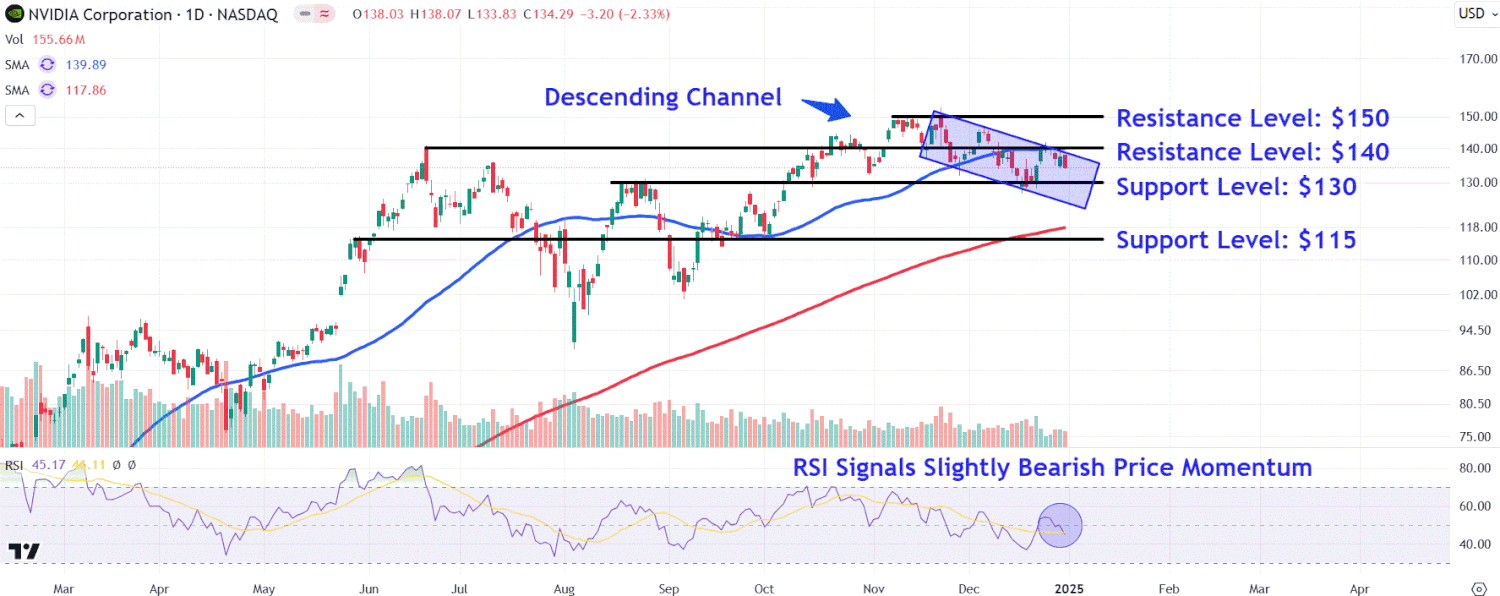
Financial markets have responded cautiously to recent congressional signals. Nvidia shares fluctuated as investors weighed the likelihood of expanded approvals.
While increased Nvidia H200 sales could enhance corporate earnings, uncertainty regarding regulatory timelines has limited sustained rallies. Technology stocks often respond sharply to policy developments due to their global exposure.
Analysts note that clarity from lawmakers could stabilize market sentiment.
Global Technology Competition in 2026
The international landscape of artificial intelligence hardware has grown increasingly competitive. Nations are investing heavily in domestic chip production to reduce reliance on foreign suppliers.
In this context, the debate over Nvidia H200 sales intersects with broader geopolitical dynamics. Policymakers must consider how export restrictions influence diplomatic relations and technological leadership.
Observers caution that decisions in Washington could reverberate across global supply chains.
Supply Chain Stability and Innovation Investment
Semiconductor production involves intricate networks of fabrication facilities, design centers, and logistics hubs. Stability in trade policy plays a vital role in sustaining these systems.
Changes affecting Nvidia H200 sales may influence procurement strategies among international partners. Industry leaders advocate for predictable regulatory frameworks to support long term planning.
Investment in research and development depends on sustained revenue streams from global markets.
Historical Context of Technology Export Controls
Export restrictions on advanced computing technologies have evolved over decades. During earlier geopolitical tensions, similar policies sought to limit access to strategic tools.
The contemporary discussion of Nvidia H200 sales reflects a modern iteration of these longstanding concerns. Historical experience suggests that export frameworks must adapt to technological progress while preserving security priorities.
Understanding past cycles provides insight into the complexity of balancing innovation and protection.
Legislative Dynamics Ahead of Key Decisions
As the 2026 legislative calendar advances, semiconductor oversight remains a priority. Lawmakers from both parties have expressed support for strengthening domestic manufacturing while safeguarding strategic assets.
The trajectory of Nvidia H200 sales policy may depend on ongoing committee hearings, classified briefings, and interagency consultations.
Political analysts anticipate continued deliberation before definitive action emerges.
Corporate Perspective and Industry Collaboration
Executives within the semiconductor sector emphasize cooperation between policymakers and manufacturers. Clear guidelines and transparent processes are essential to maintaining global partnerships.
Expanded Nvidia H200 sales under strict compliance mechanisms could reinforce confidence among international customers while respecting national security boundaries.
Industry associations continue to advocate for balanced frameworks that encourage innovation.
Geopolitical Signals and Diplomatic Considerations
Trade policy often serves as a signal of diplomatic posture. Adjustments to export controls may influence broader bilateral discussions.
Observers suggest that decisions regarding Nvidia H200 sales could shape perceptions of technological openness or restriction. Policymakers are mindful of how regulatory shifts intersect with international negotiations.
Strategic communication remains critical in navigating complex global relationships.
The Road Ahead for AI Hardware Policy
The coming months will likely bring further debate, testimony, and policy proposals. Stakeholders across government and industry remain engaged in shaping outcomes.
Ultimately, the future of Nvidia H200 sales will hinge on achieving equilibrium between security imperatives and economic vitality.
As Washington weighs its options, the semiconductor industry continues advancing at a rapid pace, underscoring the urgency of timely policy clarity.