
Paris, France — February 2, 2026, Parliament News notes, that In 2026, France finds itself at the heart of one of Europe’s most consequential labor debates as Platform workers rights continue to redefine the relationship between digital companies, governments, and workers. The renewed discussions between Uber and French social security authorities have reignited questions that stretch far beyond ride hailing, touching the foundations of how work itself is structured in a digital economy.
The outcome of these discussions carries implications for millions of workers across Europe and could influence how global technology platforms adapt to increasingly assertive regulatory environments.
The Immediate Trigger Behind Renewed Talks
The latest negotiations stem from ongoing disputes over social contributions and employment classification. French authorities argue that digital platforms operating at scale exert forms of control traditionally associated with employers. Uber, by contrast, maintains that its model enables independent economic activity rather than salaried employment.
At the center of this tension lies Platform workers rights, a concept that has become shorthand for broader concerns about social protections, economic security, and fairness in algorithm-driven labor markets.
Regulatory Institutions Take the Lead
France’s social security enforcement agencies have stepped up audits and compliance checks in 2026, reflecting political momentum behind stronger labor oversight. Officials say their actions are not punitive but corrective, aimed at ensuring that companies benefiting from large labor pools contribute proportionally to national welfare systems.
These efforts align with the government’s stated commitment to reinforcing Platform workers rights while maintaining France’s competitiveness as a digital economy.
Corporate Strategy Under Pressure
For Uber, France represents both a major market and a legal testing ground. The company has faced adverse rulings in the past, prompting adjustments to its operational approach. However, executives have consistently warned that sweeping reclassification could undermine flexibility, a core feature valued by many drivers.
The ongoing debate illustrates how Platform workers rights have evolved from a niche labor issue into a central strategic concern for multinational technology firms.
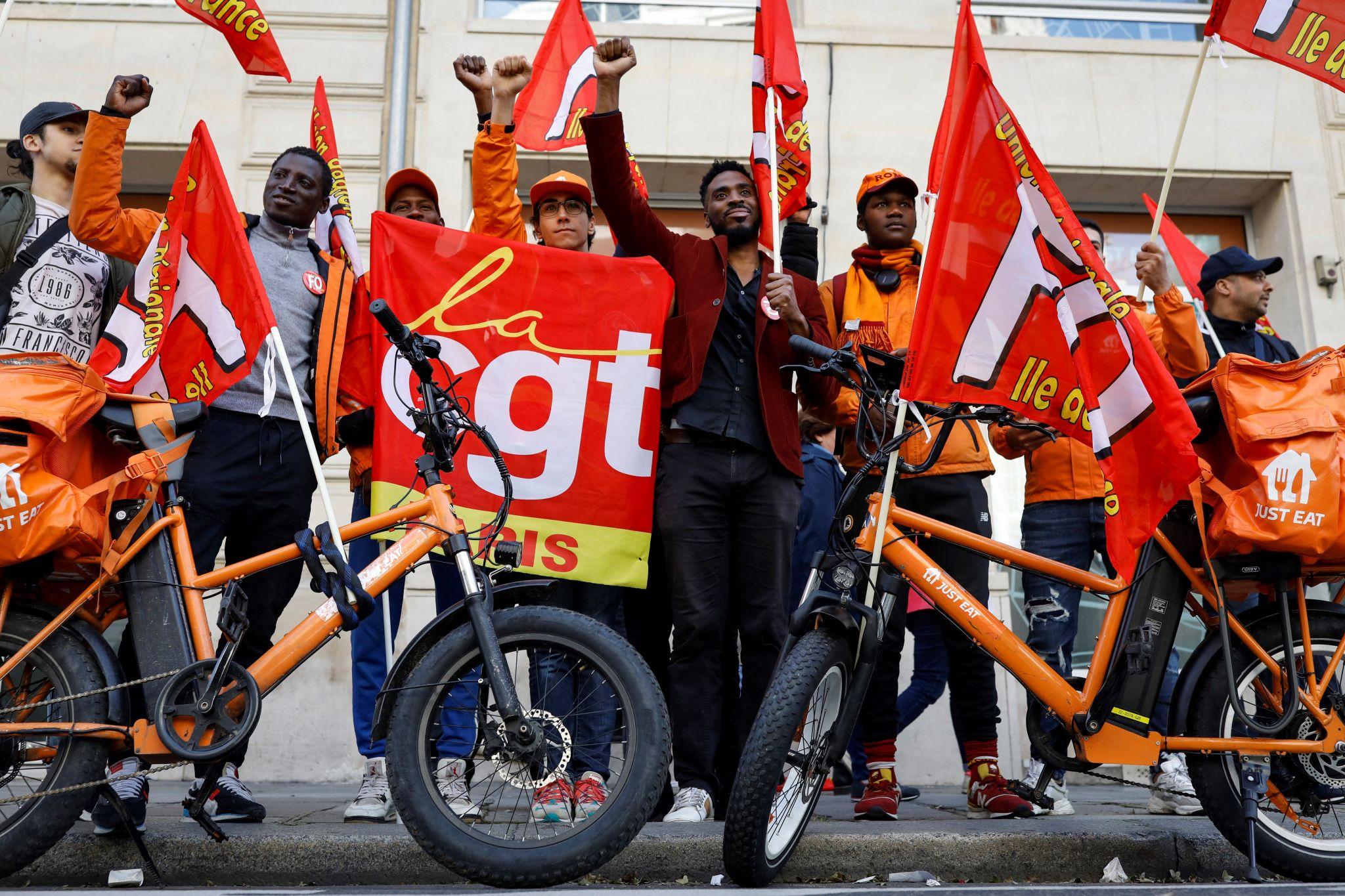
Worker Perspectives Remain Divided
Drivers themselves do not present a unified front. Some favor expanded protections, citing income volatility and lack of long-term security. Others fear that increased regulation could reduce access to work opportunities or impose rigid schedules.
This division underscores the complexity of Platform workers rights, where one policy outcome may benefit certain workers while disadvantaging others.
Economic Implications Beyond Ride Hailing
While Uber is the focal point of current negotiations, the implications extend to food delivery platforms, freelance marketplaces, and on-demand service apps. Analysts warn that inconsistent regulatory outcomes could fragment the digital labor market.
In France, policymakers view Platform workers rights as essential to preventing the emergence of a two-tier workforce divided between protected employees and unprotected contractors.
Political Momentum in 2026
The issue has gained traction across France’s political spectrum. Lawmakers from both left-leaning and centrist parties have called for clearer definitions of employment status in platform work. Parliamentary debates increasingly frame the issue as one of economic resilience and social cohesion.
As election cycles approach, Platform workers rights have become a visible policy signal for voters concerned about job security in a rapidly changing economy.
Cross-Border Ramifications in Europe
France’s actions are being closely monitored across the European Union. Several member states are grappling with similar disputes, and EU-level legislation on platform labor continues to advance.
Legal experts note that France’s handling of Platform workers rights could influence enforcement strategies and court interpretations throughout the bloc.
Technology and Algorithmic Control
A central argument in the dispute concerns algorithmic management. Regulators argue that automated pricing, performance ratings, and access controls amount to indirect supervision. Platforms counter that algorithms are neutral tools facilitating market efficiency.
This debate lies at the heart of Platform workers rights, challenging traditional legal definitions built for industrial-era employment.

Financial Stakes for Public Systems
French authorities emphasize that social contributions fund healthcare, pensions, and unemployment benefits. When workers fall outside these systems, the financial burden shifts to the state.
Officials argue that protecting Platform workers rights is necessary to preserve the long-term sustainability of public welfare institutions.
Global Context of Platform Regulation
France is not acting in isolation. Similar disputes have unfolded in the United Kingdom, Spain, and parts of the United States. However, France’s labor code and enforcement mechanisms are among the most comprehensive.
As a result, the country has become a reference point in global discussions on Platform workers rights and regulatory enforcement.
A Single Industry Voice
One labor policy expert said,
“France is testing whether modern economies can balance innovation with social protection without sacrificing either.”
Market Reaction and Investor Attention
Financial markets have responded cautiously to regulatory developments. Investors are increasingly factoring labor compliance risks into valuations of platform-based companies.
Uncertainty around Platform workers rights remains a variable in long-term growth projections for the sector.
Adapting Business Models
In response to regulatory pressure, some platforms have experimented with hybrid models combining contractor status with limited benefits. These approaches aim to address compliance concerns without full reclassification.
Whether such models adequately address Platform workers rights remains contested among policymakers and labor advocates.
Enforcement Versus Negotiation
French authorities have signaled that dialogue does not preclude enforcement. Penalties and back-payment claims remain possible outcomes if talks fail.
This dual approach reflects France’s broader strategy of asserting Platform workers rights while leaving room for negotiated solutions.
Digital Labor and Social Equity
Beyond legal classifications, the debate raises questions about inequality and access to social mobility. Platform work often attracts migrants, students, and workers excluded from traditional employment channels.
Strengthening Platform workers rights is seen by advocates as a step toward reducing structural vulnerabilities in the labor market.

The Role of Courts
Judicial rulings have played a decisive role in shaping the debate. Courts have increasingly scrutinized the realities of working relationships rather than contractual labels.
This jurisprudence has reinforced the legal basis for expanding Platform workers rights in specific circumstances.
Data Transparency and Worker Awareness
Another emerging issue concerns transparency around algorithms and earnings calculations. Regulators argue that informed workers are better positioned to assert their rights.
Data access has therefore become indirectly linked to Platform workers rights enforcement discussions.
International Companies, Local Laws
Global platforms face the challenge of adapting standardized models to diverse national frameworks. France’s assertive stance underscores the limits of one-size-fits-all strategies.
The French case highlights how Platform workers rights are shaped as much by local legal culture as by economic trends.
Balancing Flexibility and Protection
At the core of the debate lies a fundamental policy dilemma: how to preserve flexibility without eroding social protection. Neither side disputes the value of innovation, but definitions of fairness diverge sharply.
This tension continues to define discussions on Platform workers rights in France and beyond.
HISTORY of The Evolution of Platform Labor Regulation in France
France’s engagement with platform labor regulation began in the early 2010s as ride-hailing and delivery services expanded rapidly in urban centers. Initial regulatory responses focused on market access and competition with traditional taxis.
Over time, court rulings and labor inspections shifted attention toward employment conditions. The introduction of limited protections in the late 2010s marked an early acknowledgment that digital labor required tailored oversight.
By the early 2020s, France had emerged as a leading advocate for structured regulation, setting the stage for the current debates unfolding in 2026.
Looking Ahead
As negotiations continue, the outcome remains uncertain. What is clear, however, is that the decisions made in France will resonate far beyond its borders.
The future of Platform workers rights now depends on whether policymakers and platforms can reconcile economic flexibility with social responsibility in a rapidly evolving digital landscape.