

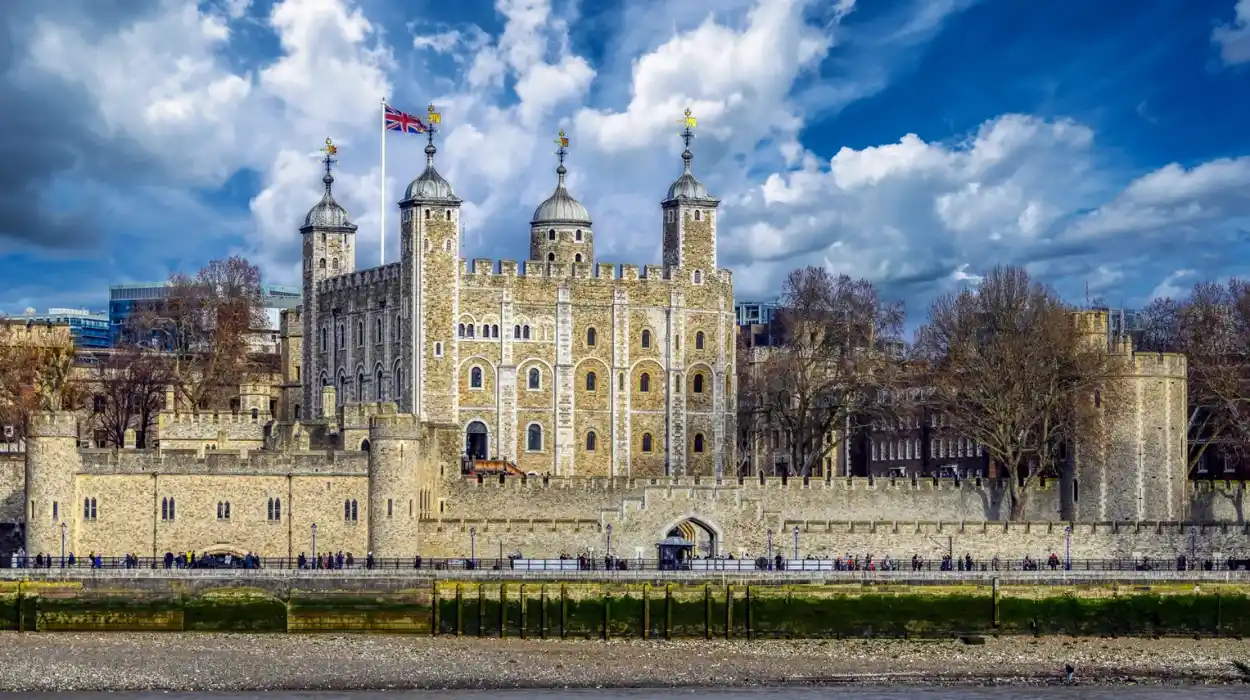
The Tower of London is one of England’s most iconic historical landmarks, revered for its majestic architecture, rich history, and the multiple roles it has played from fortress to royal palace, prison, and treasury. This article delves into when the Tower of London was built and explores its architectural evolution, historical significance, and enduring legacy.
Nestled on the north bank of the River Thames in central London, the Tower of London is not only a symbol of royal power but also a testament to Britain’s layered and often turbulent history.
Its story began shortly after the Norman Conquest of England, and over the centuries, it has evolved through expansions, renovations, and changes in its use. Today, it stands as a UNESCO World Heritage Site, attracting millions of visitors annually.
Origins: The Norman Conquest and the Tower’s Founding
The story of the Tower of London begins in 1066 with the Norman Conquest led by William the Conqueror. After his victory at the Battle of Hastings, William sought to consolidate his control over London and England. Recognizing the strategic importance of the Thames and the city, he commissioned the construction of a fortress that would both dominate the skyline and serve as a symbol of Norman authority.
The initial fortification was likely a wooden palace and defensive structure enclosed by a ditch and palisade built onto the south-east corner of the Roman city wall, utilizing the existing defenses. This early structure served to overawe the native population and to secure the city against possible insurrections.
The White Tower: Construction Beginnings Around 1078
The central feature of the Tower complex, known as the White Tower, was begun around 1078 under William’s orders and was possibly completed by 1100, shortly after the king’s death. Bishop Gundulf of Rochester oversaw its design and construction, employing Norman masonry techniques.
Built from Caen stone imported from northern France, the White Tower was a symbol of strength featuring thick stone walls, arrow slits for defence, and grand royal accommodation. As the earliest stone kept in England, it was by far the strongest defensive point of the castle complex and represented a potent assertion of Norman dominance.
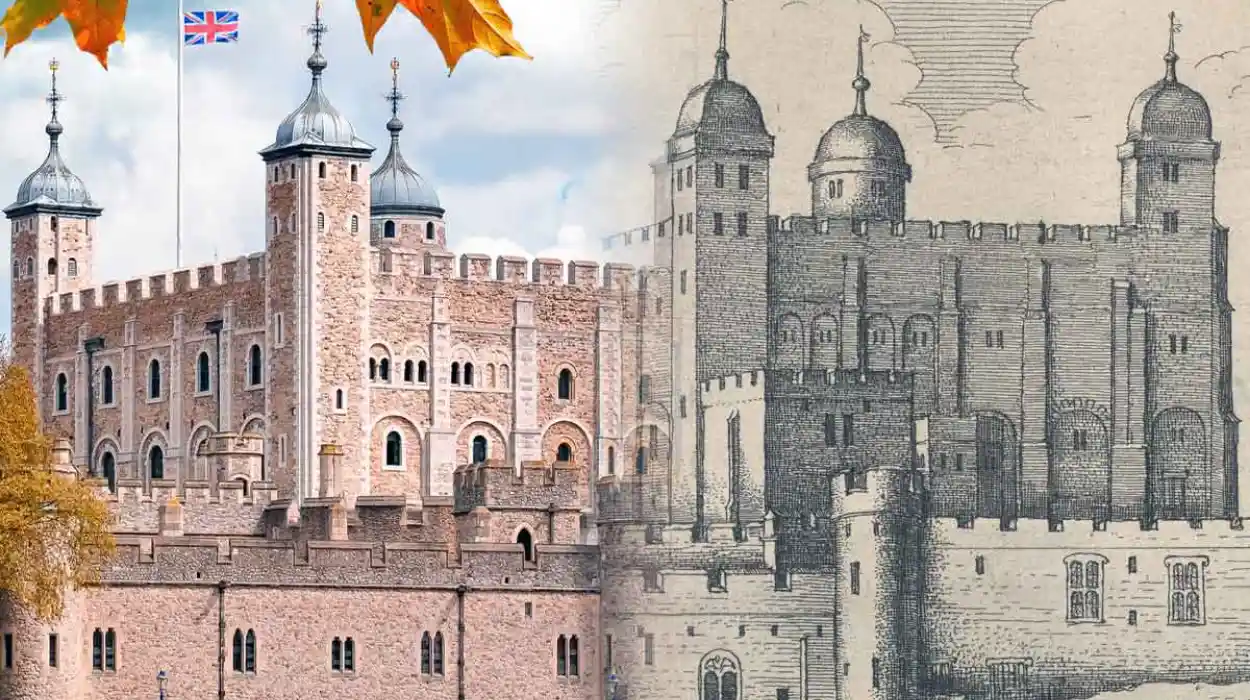
Architectural Features of the White Tower
The White Tower measures roughly 36 by 32 meters at its base and stands about 27 meters (90 feet) tall. It originally had three storeys: a basement for storage, a first floor for the constable or key figures, and an upper floor with residential chambers and St John’s Chapel, believed to be London’s oldest church.
The building included defensive features such as a retractable wooden staircase leading to the main entrance above ground level.
Over time, the White Tower became a comfortable royal residence with fireplaces, latrines built into the walls, and even private chapels, blending military functionality with regal splendor.
Expansion and Fortification in the 12th and 13th Centuries
Subsequent monarchs expanded the Tower to meet changing military and residential needs. In the late 12th century, Richard I and later Henry III extended the castle, adding defensive walls, an inner and outer ward, and a moat.
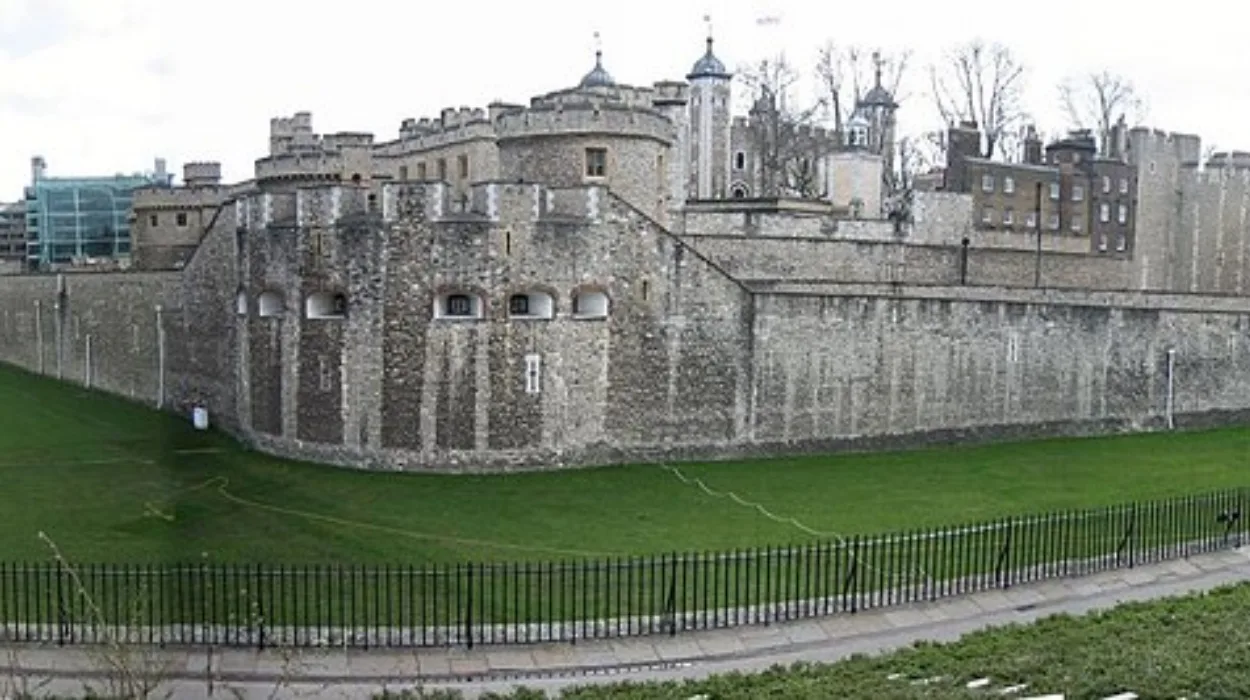
King Edward I continued the expansion in the late 13th century, building curtain walls studded with towers and creating a larger defensive perimeter that largely set the precinct’s layout visible today.
These additions transformed the Tower from a singular fortress to a complex castle, combining both defence and residence.
Roles Throughout History
Initially bustling with soldiers and royal officials, the Tower of London gradually evolved to serve multiple important functions over the centuries. It began as a royal residence, hosting monarchs and formal ceremonies, asserting its role as a center of power.
Over time, it housed the Royal Mint and became the treasury safeguarding the Crown Jewels, securing the kingdom’s valuables.
The Tower also had a menagerie, a collection of exotic animals gifted to the monarchy, showcasing status and wealth. Though not originally built as a prison, it became infamous for holding high-profile prisoners and developed a lasting reputation as a place of incarceration.
While relatively few executions took place inside the Tower itself, many notable figures were executed on its grounds or the nearby Tower Hill, cementing the site’s association with justice and punishment in English history.
The Tower in Modern Times
Today, the Tower of London is cared for by Historic Royal Palaces and remains a vibrant historical site. It hosts the Crown Jewels, the famous Yeoman Warders (“Beefeaters”), and the resident ravens that are part of folk tradition.
Ongoing preservation ensures that the Tower remains a poignant witness to England’s royal history, from Norman conquest to the present day.
Tower of London’s Construction and Legacy
The Tower of London was established by William the Conqueror shortly after his victory in 1066, initially as a wooden fortification to assert Norman control over London. Around 1078, the construction of the White Tower—its central stone keep—began under the supervision of Bishop Gundulf, marking one of the earliest and most formidable stone structures in England.
Over the subsequent centuries, the Tower expanded significantly, especially under the reigns of Kings Richard I, Henry III, and Edward I, who enhanced its defensive capabilities and enlarged the complex.
Throughout its history, the Tower has served multiple functions: as a royal palace providing residence and ceremonial space, a treasury housing the Crown Jewels, an armory storing weapons, a menagerie keeping exotic animals gifted to the monarchy, and a prison notorious for its high-profile detainees.
Today, the Tower of London stands as a UNESCO World Heritage Site and a major tourist attraction, preserving its rich history and architectural grandeur for millions of visitors each year.
