


Berlin, Germany – February 18, 2026. According to Parliament News, that Online ticket disruption Germany became a major transportation headline on Tuesday after railway booking platforms experienced widespread digital outages linked to a large scale cyber incident. The disruption temporarily limited passenger access to online reservations, mobile ticketing services, and digital payment confirmations across multiple regions.
Rail operators confirmed that physical train services continued running, but digital booking systems faced intermittent interruptions throughout the day. Cybersecurity teams immediately initiated mitigation protocols while federal authorities began assessing the broader implications for Germany’s critical infrastructure.
What Triggered the Digital Rail Outage
Online ticket disruption Germany was traced to a Distributed Denial of Service attack that overwhelmed booking servers with excessive traffic. A DDoS attack functions by flooding targeted platforms with more requests than they can process, temporarily blocking legitimate users from completing transactions.
Passengers attempting to reserve seats or modify existing bookings reported slow load times, payment errors, and session timeouts. Mobile applications mirrored similar issues, compounding frustration during peak travel hours.
While digital systems were impacted, railway officials clarified that operational rail traffic control systems were not compromised. Train movements, signaling, and onboard safety systems continued functioning without interruption.
Passenger Experience Across Major Cities
Online ticket disruption Germany affected travelers in Berlin, Munich, Frankfurt, Hamburg, and Cologne. Many commuters rely exclusively on digital ticketing platforms for daily travel, particularly in urban centers where paper tickets are increasingly rare.
Station ticket counters experienced higher foot traffic as passengers sought alternatives. Customer support lines also reported increased call volumes. Some travelers delayed bookings until online systems stabilized later in the day.
Despite the inconvenience, there were no reports of widespread cancellations directly tied to the cyber incident. Most delays were confined to digital transactions rather than physical rail operations.
Official Response from Railway Authorities
Railway management confirmed that online ticket disruption Germany resulted from external malicious activity rather than internal technical failure. Technical teams deployed traffic filtering tools and redirected network flow to protective cloud infrastructure to absorb excess traffic.
A spokesperson stated:
“Our priority is restoring full digital access for passengers while ensuring that operational safety systems remain secure and unaffected.”
Authorities emphasized transparency and cooperation with national cybersecurity agencies. Log analysis and forensic monitoring remain ongoing to determine the origin and scale of the attack.
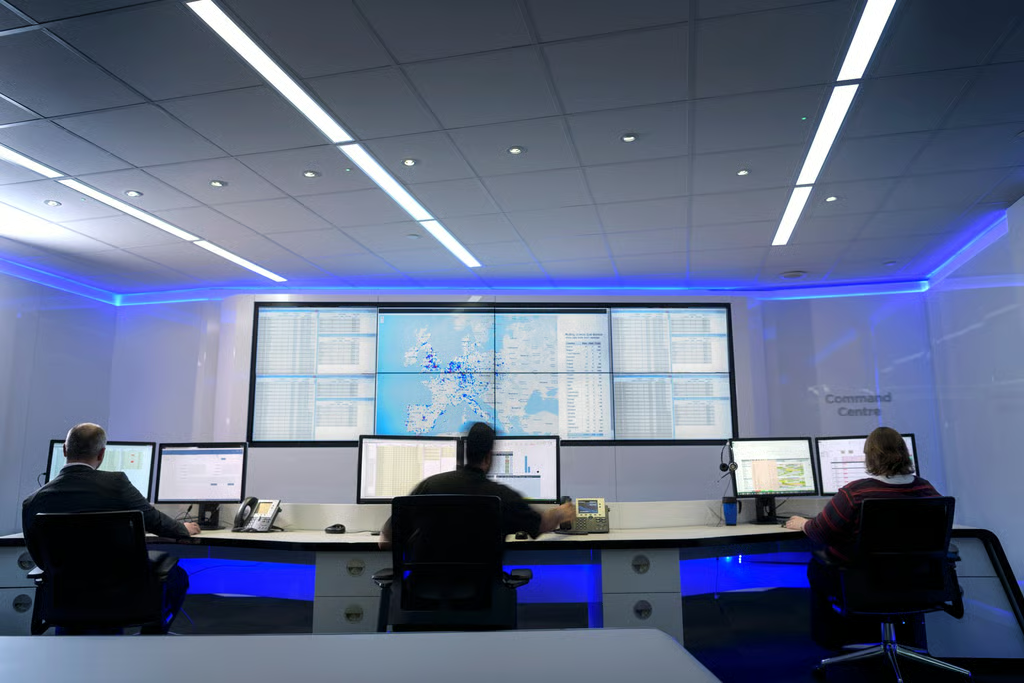
Understanding the DDoS Mechanism
Online ticket disruption Germany highlights the growing risk DDoS attacks pose to critical transportation infrastructure. Unlike data breaches that focus on stealing information, DDoS attacks aim to disable service availability.
Cybersecurity experts explain that these attacks often originate from networks of compromised devices distributed globally. By sending massive volumes of automated traffic, attackers can overwhelm servers within minutes.
Mitigation strategies typically include traffic scrubbing centers, firewall reinforcement, and artificial intelligence based anomaly detection systems. Recovery speed depends on how quickly malicious traffic patterns are identified and filtered.
Economic Implications for the Rail Sector
Online ticket disruption Germany may carry financial implications beyond immediate service interruptions. Digital ticketing represents a substantial portion of railway revenue. Even temporary disruptions can delay transactions and reduce consumer confidence.
Rail operators are expected to conduct internal audits and potentially increase cybersecurity investment. Additional network redundancies, server scaling capabilities, and stress testing may become standard preventive measures.
Businesses that rely on rail freight and passenger mobility are also monitoring the situation closely. Although freight logistics were not directly impacted, any digital vulnerability raises concerns about systemic resilience.
Cybersecurity and Critical Infrastructure
Online ticket disruption Germany underscores how transportation networks have become deeply integrated with digital ecosystems. Booking systems, route planners, mobile apps, and payment gateways are interconnected components of modern rail operations.
Government agencies have classified transportation as critical infrastructure, making cybersecurity protection a national priority. Increased funding and public private cooperation have strengthened defenses in recent years, but evolving attack methods require continuous adaptation.
Experts note that DDoS attacks are sometimes used as diversionary tactics, though officials have not indicated any secondary breach in this case.
Public Confidence and Communication Strategy
Online ticket disruption Germany sparked immediate social media discussion as travelers shared screenshots of failed booking attempts. Clear communication from railway officials helped reduce misinformation and prevent unnecessary panic.
Updates were issued throughout the day confirming that safety systems remained operational. Transparency played a significant role in maintaining public trust during the disruption.
Passenger advocacy groups called for continued investment in digital infrastructure resilience, arguing that dependable online services are essential in modern transportation systems.

International Context of Railway Cyber Threats
Online ticket disruption Germany reflects a broader international trend of cyber threats targeting rail systems across Europe and beyond. Similar incidents in other countries have prompted regional cybersecurity cooperation initiatives.
European transportation authorities regularly exchange intelligence regarding threat detection patterns and response strategies. Cross border collaboration is considered critical because cyberattacks often originate outside national jurisdictions.
The event may accelerate new security protocols within EU transportation frameworks to ensure greater consistency in defense standards.
Restoration and System Stabilization
By late afternoon, technical teams reported gradual stabilization of online platforms. Online ticket disruption Germany subsided as malicious traffic was filtered and server capacity normalized.
Passengers were advised to retry bookings if earlier transactions failed. Rail operators also reassured customers that no personal data compromise had been detected during preliminary reviews.
Continuous monitoring remains active to prevent follow up attacks and to assess long term security enhancements.
Infrastructure Resilience Moving Forward
Online ticket disruption Germany has renewed debate about digital resilience planning. Experts suggest that layered defense strategies must include:
- Real time traffic monitoring
- Automated anomaly detection
- Cloud based traffic absorption
- Regular penetration testing
- Crisis communication protocols
Cybersecurity analysts argue that prevention is more cost effective than reactive recovery. Transportation providers are expected to integrate additional redundancy systems to minimize future service interruptions.
The Digital Rails of Tomorrow
Online ticket disruption Germany may ultimately serve as a catalyst for modernization. Germany’s rail network is among Europe’s largest, and digital ticketing continues expanding each year.
As booking systems become increasingly sophisticated, cybersecurity must evolve in parallel. Protecting digital access points is now as vital as maintaining tracks and trains.
Federal authorities have pledged to review infrastructure safeguards and support further investment where necessary.

When Code Attacks the Commute
Online ticket disruption Germany illustrates how invisible digital threats can affect daily life within minutes. What began as a surge of abnormal traffic quickly transformed into a nationwide booking challenge.
Although trains kept moving, the event demonstrated the vulnerability of digital convenience systems. Modern commuters expect seamless online access, and disruptions immediately attract attention.
The incident reinforces a fundamental lesson: digital infrastructure resilience is inseparable from public transportation reliability.
As investigations continue, railway authorities remain confident that strengthened defenses will reduce future risks. For passengers, the priority remains simple access, dependable service, and assurance that their journey will proceed without disruption.
